 Sorry about no postings. I'm on a little end-of-the-season vacation. Back in a jiffy.
Thursday, October 26, 2006


Wednesday, October 18, 2006
Tiger on his religion
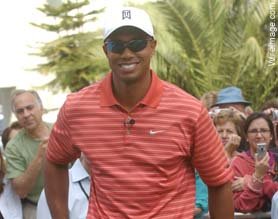
If you ever wondered where Tiger Woods comes down on religion, check out this item from the NY Post's gossip page, Page Six.
Tiger Woods got ambushed by an evangelical guest of Nike on Oct. 9 during an exclusive golf outing for top business and entertainment executives.
According to our spy, 30 people - including Clear Channel Radio CEO Mark Mays, Louis Vuitton North America chief Daniel LaLonde and Details magazine editor Daniel Peres - gathered at the Trump golf course in Los Angeles for the 2006 "Tee It Up With Tiger Woods" event, which included a private golf session and lunch with the living legend. "
During the lunch, there was a Q&A session with Woods, and most people were asking about their swings or golf questions," our source said. "Until some guy - a guest of Nike - stood up and said, 'Have you accepted Jesus as your Lord and Savior? And if not, prayfully, would you?' "
The source added, "You could have heard a pin drop. People were mortified. But Tiger was as unflappable as he is on the golf course and responded, 'My father was a Christian - of course Christianity was part of my life - but my mother is Asian and Buddhism was also part of my childhood, so I practice both faiths respectfully.' "
Monday, October 16, 2006
Who makes what in golf?
If you want some juicy reading, the November issue of Golf Digest is devoted to the money in golf. Included is a list of who makes how much money. Here's a sampling:
Tim Finchem, PGA Tour commish, $4,067,318
Joe Steranka, CEO of PGA of America, $600,000
David Fay, Exec. Dir of the USGA, $575,468
Carolyn Bivens, LPGA commish, $525,000
Joe Louis Barrow Jr., Exec. Dir of the First Tee, $404,062
Dick Rugge, Senior technical dir of USGA, $385,482
Rick George, President, Champions Tour, $322,269
Marty Parkes, Senior dir of communcations for USGA, $200,069
Jim Nantz, CBS, $4.3 million
Nick Faldo, ABC, $900,000
Kelly Tilghman, Golf Channel, $375,000
Kraig Kahn, Golf Channel, $315,000
Tim Finchem, PGA Tour commish, $4,067,318
Joe Steranka, CEO of PGA of America, $600,000
David Fay, Exec. Dir of the USGA, $575,468
Carolyn Bivens, LPGA commish, $525,000
Joe Louis Barrow Jr., Exec. Dir of the First Tee, $404,062
Dick Rugge, Senior technical dir of USGA, $385,482
Rick George, President, Champions Tour, $322,269
Marty Parkes, Senior dir of communcations for USGA, $200,069
Jim Nantz, CBS, $4.3 million
Nick Faldo, ABC, $900,000
Kelly Tilghman, Golf Channel, $375,000
Kraig Kahn, Golf Channel, $315,000
Thursday, October 12, 2006
Rees Jones vs. Robert T. Jones Jr.
Good story from the Fort Lauderdale paper about the bad blood between the sons of the late golf course architect Robert Trent Jones...
By Vanessa Blum
South Florida Sun-Sentinel
The case is called Jones v. Jones. It pits the two sons of famed golf course designer Robert Trent Jones in a messy court fight over $100,000 and the use of their deceased father's name.
The men, both successful golf architects in their 60s, are known to be fierce competitors who conduct most of their communication through lawyers. Now younger brother Rees Jones is suing older brother Robert Trent Jones Jr. for his share of taxes owed on the estate of their mother, who died in 1987.
Rees Jones also claims Robert Jr. misappropriated their father's name when he contracted with a clothing firm to create a Robert Trent Jones apparel line.The Jones sibling rivalry is no secret in the golf world. Following their father's death in 2000, the brothers clashed over plans for the Coral Ridge Country Club in Fort Lauderdale, which the senior Jones opened in 1956 and considered a home. Still, that the brothers would go to court over a relatively modest sum of money is testament to how frayed their relationship has become. Even the language of the suit hints at a much larger family drama.
"This is a story about the eldest son of a famous golf course designer, who has selfishly taken advantage of his younger brother since their father's death through broken promises and clandestine conduct," states the complaint.
Read the full story here.
By Vanessa Blum
South Florida Sun-Sentinel
The case is called Jones v. Jones. It pits the two sons of famed golf course designer Robert Trent Jones in a messy court fight over $100,000 and the use of their deceased father's name.
The men, both successful golf architects in their 60s, are known to be fierce competitors who conduct most of their communication through lawyers. Now younger brother Rees Jones is suing older brother Robert Trent Jones Jr. for his share of taxes owed on the estate of their mother, who died in 1987.
Rees Jones also claims Robert Jr. misappropriated their father's name when he contracted with a clothing firm to create a Robert Trent Jones apparel line.The Jones sibling rivalry is no secret in the golf world. Following their father's death in 2000, the brothers clashed over plans for the Coral Ridge Country Club in Fort Lauderdale, which the senior Jones opened in 1956 and considered a home. Still, that the brothers would go to court over a relatively modest sum of money is testament to how frayed their relationship has become. Even the language of the suit hints at a much larger family drama.
"This is a story about the eldest son of a famous golf course designer, who has selfishly taken advantage of his younger brother since their father's death through broken promises and clandestine conduct," states the complaint.
Read the full story here.
Monday, October 09, 2006
David Love ends three year drought
 Excerpts of Davis Love's post-victory press conference in Greensboro...
TODD BUDNICK (PGA Tour): Davis, congratulations on your 19th career PGA Tour win and your first since 2003. I know a big relief for you.
He took that to heart, I guess and, you know, I knew I was close. I knew when I got on my way I would play well and, you know, it took, you know, maybe sometime off and some reflecting and getting my patience back but certainly grinding for the Ryder Cup was it was a detriment and also I did it the wrong way and, you know, you've been out 20 years, you're not too old to learn new tricks.
I certainly learned a big lesson this year because I wanted the Ryder Cup so bad that I let it get in the way of everything else I was doing so it's nice to be back, you know, challenging for the lead and pulling it off rather than, you know, finishing 15th all the time.
Q Davis, when you got the lead, what was your mindset, did you just think you had to do more or what
DAVIS LOVE: I was just trying to birdie every hole. I was peaking at the leaderboard off and on. I wasn't staring at it as much as I usually do.
I looked early and saw, you know, that somebody was, you know, 6 under, I can't remember, which is good.
I didn't pay as much attention to what everybody else was doing and I talked to my daughter and her horse trainer about the way they were riding their horses at the Nationals, we went to a few weeks ago, and I kept thinking, "Wait a minute, that's what you should be doing."
I was telling them they were worrying about the other horses too much. That's what I've been doing. I've been worried about what everybody else is doing and expectations and things didn't matter.
Once I saw that after I birdied 13, I saw that I think I had gotten tied and I said, "Alright, just try to birdie every hole and don't look again" and I really didn't look again until 16.
I caught a glimpse that I was two ahead, and just tried to obviously tried to birdie the last two holes but play them conservatively. I hit a little too much club at 17 and obviously played right in the middle of the green on 18.
I even asked my caddie on 18 green, "We definitely are two ahead, right?" And he said, I was and then just to double check he went and asked Chris's caddie just to make sure.
I really blocked it all out that I was leading and just trying to play every hole and birdie every hole.
Q Davis, when you are a couple behind at the tournament and you haven't won in three years, is it hard not to get down on yourself and say, "Here we go again, another close call?"
I spent a lot of time with Bob Rotella, especially this week talking about you're playing well, you just got to be committed to doing the things that are simple and straightforward that make you play well, and obviously thinking about being two ahead or three down or that you haven't won in a while or you want to go to Kapalaui or the Tour Championship, those thoughts don't do you any good while you're playing.
That why it's hard to win and to block out the negative thoughts, the expectations and if I would have been staring at that leaderboard and found out that I was three shots behind, I probably wouldn't have won and I was committed today to just playing my own game and keeping my head down and, you know, people say you should smile more, you should pump your fist more when you make putts.
I really through the middle of that round didn't know what was going on because I was trying to stay focused on what I was doing.
Q Davis, did you hear the fans saying, you know, he needs this, he needs this to win, just that you need a win? Do you hear that from a lot of fans?
You hear all that stuff and, you know, your friends and your family in trying to help you, they get more and more nervous, you know, because they don't know well, is he playing bad, something we're doing or should we ask him why he's playing bad or ask him what we can to help?
When you're successful for a long time and you're not successful, people don't know how to act. I told my wife earlier this year, I said, "You know, nobody asks me any questions when I was playing great. They didn't ask me how I did it or why I did it or what are you doing to play so well." Just took it for granted, basically.
Then you start playing poorly, then you start getting the questions, what's the matter with you. Not that way, but, you know, what should you do different? Don't you think you ought to do this or that you get a lot of advice when you're not playing well.
It makes it hard. You hear things and, you know, people try to be positive but when they do that, they're actually reminding you of a negative and it really doesn't help and that's why I say, you know, Rotella and Jack Lumpkin have been such a big part of bringing me back because I'm working everyday on alignment, my feet and my set up.
Simple things just that I have to get back to basics and if I do the basic things well, I'll play well. I was in some bad habits physically and immediately tally.
Q Does doubt in the past three years enter your mind and you think maybe it's not mechanical, maybe it's a mental thing?
Lot of these guys that go out and have surgery like Scott Verplank, it has to creep in there because you have to be, you know, fit physically and mentally and you have to be a great player to win out here and that doubt certainly creeps in I don't doubt that I can play out here and stay exempt and make a nice living.
You doubt that you can beat a guy like Phil Mickelson or Tiger Woods if you're not a hundred percent and I think your swing adjusts when you're not feeling well and then the doubt creeps in even more because you're not hitting the way you normally used to hit it.
And there's no reason at 42, you know, that I can't drive it as far as anybody else or putt as well as anybody else but when you're not feeling well, it certainly you feel like you're at a disadvantage when you go to the first tee with Tiger Woods and he's feeling great and you're not feeling good.
Q Were you making the Ryder Cup team so important that when something like that happened then you would say, "Here it goes again"?
But I was playing for the record, you know? I was playing for I want to make 7 so I can make 8 and rather than just playing the game and trying to be playing well when I got to the Ryder Cup I've never really been in that situation since all the way back to Dave Stockton's team where I was grinding it out then and didn't make it but I just made it too big a deal and, you know, again, it doesn't really matter what it is, winning or making the Ryder Cup team or a 900,000 dollar check or a free Chrysler car when you win the tournament, whatever it is you think about it gets you thinking about something other than playing the game is what kills you.
Q Over the years there have been golfers before the advent of the Champions Tour maybe along about this time start drifting away from the Tour in club pro jobs, et cetera.
If you stay competitive, is that something you aspire to play with your old buddies out there or will you go more toward your golf design company?
DAVIS LOVE: I don't want to leave my old buddies. You know, I want to play out here for a long time, you know? I want to stay healthy and continue to work hard and try to win golf tournaments out here.
I had a great talk with Walter "Uline" from Titleist Tuesday night. I spoke at a thing for them in Rhode Island, had a great talk with him.
Told him, I want to play on the PGA Tour like Fred Funk and like Jay Haas, play to win up into my 50s and then I'll make that decision.
I want to play my way out of being a Ryder Cup Captain. I want to be on the next three, four teams and, you know, when I was coming out on Tour I watched Jack Nicklaus win the Masters at 46. That's the way I'm thinking, you know, that I can stay competitive and, you know, when I get to my 50s hopefully I'm sitting around like Fred Funk trying to decide which Tour I want to play. That would be the best case scenario.
Q Davis, you talk about how you just want to win, period, but now that you have won here, is that one a little bit more special?
DAVIS LOVE: Definitely special. When I sit back and think about it, you know, how many times I've come close to winning, how many times I've had, you know, good Saturdays and bad Sundays or bad Saturdays and good Sundays and just was one round away from winning a golf tournament and what it does mean to win out here.
I was rolling right along looking like I was going for 30 Tour wins and hit a dry patch that is going to keep me from getting, probably getting to 30 but if I can, you know, continue working hard and continue the passion I have for it, hopefully I can still get there but this one will definitely be one I always remember.
Like I say at Hilton Head where I one won there a bunch. Everyone is different no matter if it's the same golf course, the same town. Everyone is different and everyone means something and this was one that I conquered, you know, more inner demons than anything, great players that shot some good scores but, you know, when there's tournaments when you're leading and you're supposed to win and you're the top ranked player going in and those are the ones that Tiger Woods wins, you know, when he's got the lead and he's supposed to win, he goes on and wins.
That's the difference I think between a top player and the rest of the golf world. So it's nice to have those kind of rounds every once in a while.
Golf Channel announces PGA Tour line-up
This announcement just in from the Golf Channel regarding its on-air talent line-up for next year...
Kelly Tilghman to Make History as First Female Announcer
ORLANDO, Fla. (Oct. 9, 2006) – A wealth of experience and a variety of talents unmatched in the world of televised golf will comprise The Golf Channel’s broadcast team when the network’s PGA TOUR tournament telecasts commence in 2007, with members including six-time major championship winner Nick Faldo and the first, full-time female play-by-play golf commentator in the history of television, Kelly Tilghman.
With every PGA TOUR official money event either beginning or airing in its entirety on The Golf Channel, the 10-person team will handle a full slate of 43 official events in 2007, including the first three events of the year. Viewers will first see members of the team in action on Jan. 4 during the first round of the Mercedes-Benz Championship from Hawaii.
“A team of Golf Channel professionals – who have lived and breathed golf for more than 10 years and understand its traditions – former players and seasoned golf broadcasters makes for quite an impressive lineup,” said Golf Channel Executive Producer Tony Tortorici.
Tilghman, a former touring professional who has been with The Golf Channel since its inception and has worked her way up through a variety of roles to become one of the network’s most popular on-air personalities, will pair with Faldo in the announce booth during the first three events of 2007. The other two events include the Sony Open and the Bob Hope Chrysler Classic. The Golf Channel announced the addition of Faldo as its lead PGA TOUR analyst in July.
“I’m excited about this opportunity for many reasons, and I can’t wait to get things started,” said Tilghman. “All of us are looking forward to 2007.”
The complement of talent, who are expected to play a variety of on-air roles throughout the year, will include:
Peter Oosterhuis, who in 1995 paired with Renton Laidlaw to host the Dubai Desert Classic – the first golf tournament ever televised on The Golf Channel – will continue as a Golf Channel mainstay and will don several hats, including 17th tower analyst and supporting the network’s ample offering of studio shows surrounding its golf coverage.
Mark Rolfing, who has served as host for Champions Tour events on The Golf Channel, will reprise that role for numerous PGA TOUR events during the FedExCup season. With intimate knowledge of Hawaii golf, he also will serve as a tower analyst for both the Mercedes-Benz Championship and Sony Open.
Dottie Pepper will be expanding her tournament role with The Golf Channel. Already lead analyst for the network’s LPGA Tour telecasts, she will serve as an on-course reporter for a select number of events, beginning with the Mercedes-Benz Championship and the Bob Hope Chrysler Classic.
Rocco Mediate, current player and five-time PGA TOUR champion, will serve as an on-course reporter. Other than through his tournament play, Golf Channel viewers have enjoyed Mediate’s personable and entertaining manner as a featured player on the network’s popular Playing Lessons With the Pros and Personal Lessons series.
Rich Lerner, ever-versatile and, along with Tilghman, one of The Golf Channel’s long-time cast, will assume several roles. He will provide play-by-play commentary for select tournaments and, as show host, he will set the scene for viewers at the beginning of PGA TOUR telecasts, as well as conducting player interviews and delivering his signature essays.
Frank Nobilo, who has lent his valuable expertise to The Golf Channel as former player with 14 worldwide wins, will serve as an analyst for select FedExCup season and Fall Series events. He also will continue to contribute as lead analyst for the network’s Champions Tour telecasts, as well as studio shows.
Jerry Foltz will supplement his duties as lead on-course reporter for The Golf Channel’s Nationwide Tour telecasts and contribute in the same capacity for the first three PGA TOUR events of 2007, as well as other select events for the balance of the season.
Steve Sands, who has been a Golf Central reporter for PGA TOUR events, will continue in that role, but will become part of the network’s Thursday and Friday telecasts conducting player interviews. He also will contribute to studio programs while covering tournament play.
During early-round, Thursday-Friday telecasts on The Golf Channel, the network also will incorporate the talents of CBS and NBC golf commentators into their team of broadcasters, making the overall mix of personalities seen on The Golf Channel a great combination of all the networks televising golf.
"The PGA TOUR is delighted with the strong talent team that The Golf Channel has assembled for TOUR telecasts next year," said PGA TOUR Commissioner Tim Finchem. "As the TOUR enters a new era in golf beginning in January, we're confident that The Golf Channel will offer compelling coverage of PGA TOUR events throughout the FedExCup season and the Fall Series.”
Kelly Tilghman to Make History as First Female Announcer
ORLANDO, Fla. (Oct. 9, 2006) – A wealth of experience and a variety of talents unmatched in the world of televised golf will comprise The Golf Channel’s broadcast team when the network’s PGA TOUR tournament telecasts commence in 2007, with members including six-time major championship winner Nick Faldo and the first, full-time female play-by-play golf commentator in the history of television, Kelly Tilghman.
With every PGA TOUR official money event either beginning or airing in its entirety on The Golf Channel, the 10-person team will handle a full slate of 43 official events in 2007, including the first three events of the year. Viewers will first see members of the team in action on Jan. 4 during the first round of the Mercedes-Benz Championship from Hawaii.
“A team of Golf Channel professionals – who have lived and breathed golf for more than 10 years and understand its traditions – former players and seasoned golf broadcasters makes for quite an impressive lineup,” said Golf Channel Executive Producer Tony Tortorici.
Tilghman, a former touring professional who has been with The Golf Channel since its inception and has worked her way up through a variety of roles to become one of the network’s most popular on-air personalities, will pair with Faldo in the announce booth during the first three events of 2007. The other two events include the Sony Open and the Bob Hope Chrysler Classic. The Golf Channel announced the addition of Faldo as its lead PGA TOUR analyst in July.
“I’m excited about this opportunity for many reasons, and I can’t wait to get things started,” said Tilghman. “All of us are looking forward to 2007.”
The complement of talent, who are expected to play a variety of on-air roles throughout the year, will include:
Peter Oosterhuis, who in 1995 paired with Renton Laidlaw to host the Dubai Desert Classic – the first golf tournament ever televised on The Golf Channel – will continue as a Golf Channel mainstay and will don several hats, including 17th tower analyst and supporting the network’s ample offering of studio shows surrounding its golf coverage.
Mark Rolfing, who has served as host for Champions Tour events on The Golf Channel, will reprise that role for numerous PGA TOUR events during the FedExCup season. With intimate knowledge of Hawaii golf, he also will serve as a tower analyst for both the Mercedes-Benz Championship and Sony Open.
Dottie Pepper will be expanding her tournament role with The Golf Channel. Already lead analyst for the network’s LPGA Tour telecasts, she will serve as an on-course reporter for a select number of events, beginning with the Mercedes-Benz Championship and the Bob Hope Chrysler Classic.
Rocco Mediate, current player and five-time PGA TOUR champion, will serve as an on-course reporter. Other than through his tournament play, Golf Channel viewers have enjoyed Mediate’s personable and entertaining manner as a featured player on the network’s popular Playing Lessons With the Pros and Personal Lessons series.
Rich Lerner, ever-versatile and, along with Tilghman, one of The Golf Channel’s long-time cast, will assume several roles. He will provide play-by-play commentary for select tournaments and, as show host, he will set the scene for viewers at the beginning of PGA TOUR telecasts, as well as conducting player interviews and delivering his signature essays.
Frank Nobilo, who has lent his valuable expertise to The Golf Channel as former player with 14 worldwide wins, will serve as an analyst for select FedExCup season and Fall Series events. He also will continue to contribute as lead analyst for the network’s Champions Tour telecasts, as well as studio shows.
Jerry Foltz will supplement his duties as lead on-course reporter for The Golf Channel’s Nationwide Tour telecasts and contribute in the same capacity for the first three PGA TOUR events of 2007, as well as other select events for the balance of the season.
Steve Sands, who has been a Golf Central reporter for PGA TOUR events, will continue in that role, but will become part of the network’s Thursday and Friday telecasts conducting player interviews. He also will contribute to studio programs while covering tournament play.
During early-round, Thursday-Friday telecasts on The Golf Channel, the network also will incorporate the talents of CBS and NBC golf commentators into their team of broadcasters, making the overall mix of personalities seen on The Golf Channel a great combination of all the networks televising golf.
"The PGA TOUR is delighted with the strong talent team that The Golf Channel has assembled for TOUR telecasts next year," said PGA TOUR Commissioner Tim Finchem. "As the TOUR enters a new era in golf beginning in January, we're confident that The Golf Channel will offer compelling coverage of PGA TOUR events throughout the FedExCup season and the Fall Series.”
Wednesday, October 04, 2006
Faldo conference call
At CBS, Lanny Wadkins is out and Nick Faldo is in. Here are excepts from a conference call with the media..
EXCERPTS FROM CBS SPORTS’ OCTOBER 3
NICK FALDO ANNOUNCEMENT CONFERENCE CALL
Sean McManus, President CBS News and Sports:
One of the things that we’re proudest of at CBS Sports is the quality of our on-air commentary team and throughout the years whenever we’ve had a chance to improve that line-up we’ve tried to take advantage of those opportunities, most recently with James Brown. One of the things we’re also most proud of is our golf line-up. We think we have the deepest, most experienced and best golf announcing crew in the business. But just like in other sports, when we have an opportunity to make ourselves better and improve ourselves, we’re going to take advantage of it.
Tony Petitti, Executive Vice President and Executive Producer, CBS Sports:
…We viewed it as an opportunity to strengthen our team, a team that we already believe is the best in golf, and to add Nick to this great golf line-up is just an exciting day for us and we’re really looking forward to the great work he’s going to be able to do for us, and the schedule he’s committed to being a full-time broadcaster. That was important to us, important to our golf team…it was a really easy decision for us to add Nick to our team.
Nick Faldo on Different Personality in the Television Tower from Playing Days:
When you’re a competitor and I was, I deemed myself as a good, honest, sporting competitor. I had some great men to play against. I felt I was there to win and it was very much, that was the style and I would say the style I played you know the head down, get on with it, blinkers on that kind of look… the bottom line to be really honest, I’m a shy guy, and I guess given this opportunity to project yourself, or the way I am on TV, is just me, simple as that. I’m not putting anything on and I’m enjoying. You know number one for me is I really enjoy this work now. It’s a new string to my bow and it’s as simple as that.
Faldo on Greatest Assets as Analyst:
I think my ability. I can sense or look into the players eyes and I can sense what’s really going on. Most people think, well you’re going to get nervous down the back nine as an example. And I can obviously look at somebody and tell whether he’s right on the first tee or the last round. You might be able to tell after 54 or somewhere in there or even 36. Guys might be leading the tournament and you can tell where they’re comfortable or uncomfortable. I know what the players like. I know what they really do find difficult and all these sorts of things. I think that’s what I’m trying to bring, a little bit of insight to what’s going on, the way they think. Sometimes it’s not as plain sailing as we would believe, what their difficulties are. And obviously, I know what pressure is all about as we call it, finishing off a tournament, what that takes at all the different levels. I think it’s just an insight into their minds and I think I can make a pretty good calculated guess that how I felt is obviously how they would feel.
Faldo on the Masters®:
That’s a major decision for me. I will be in the tower next year at Augusta for the whole week so I will not be playing. Obviously that was a major part of my decision. I think that shows my commitment to the broadcasting world that I view this as a fabulous opportunity for me, which may only come once every 10 years or something. So to join CBS, to be there, as I said (with) Jim Nantz, lead analyst is a very exciting prospect for me. It will seriously curtail my playing career, as you know I turn 50 in July. I will play the British Open. I will play our British Seniors the week after. And then obviously I will do my best to play where I feel I’m capable of playing on the Champions Tour. So my playing days aren’t completely over. I’m going to do my best but, obviously, my priority is now given to CBS.
EXCERPTS FROM CBS SPORTS’ OCTOBER 3
NICK FALDO ANNOUNCEMENT CONFERENCE CALL
Sean McManus, President CBS News and Sports:
One of the things that we’re proudest of at CBS Sports is the quality of our on-air commentary team and throughout the years whenever we’ve had a chance to improve that line-up we’ve tried to take advantage of those opportunities, most recently with James Brown. One of the things we’re also most proud of is our golf line-up. We think we have the deepest, most experienced and best golf announcing crew in the business. But just like in other sports, when we have an opportunity to make ourselves better and improve ourselves, we’re going to take advantage of it.
Tony Petitti, Executive Vice President and Executive Producer, CBS Sports:
…We viewed it as an opportunity to strengthen our team, a team that we already believe is the best in golf, and to add Nick to this great golf line-up is just an exciting day for us and we’re really looking forward to the great work he’s going to be able to do for us, and the schedule he’s committed to being a full-time broadcaster. That was important to us, important to our golf team…it was a really easy decision for us to add Nick to our team.
Nick Faldo on Different Personality in the Television Tower from Playing Days:
When you’re a competitor and I was, I deemed myself as a good, honest, sporting competitor. I had some great men to play against. I felt I was there to win and it was very much, that was the style and I would say the style I played you know the head down, get on with it, blinkers on that kind of look… the bottom line to be really honest, I’m a shy guy, and I guess given this opportunity to project yourself, or the way I am on TV, is just me, simple as that. I’m not putting anything on and I’m enjoying. You know number one for me is I really enjoy this work now. It’s a new string to my bow and it’s as simple as that.
Faldo on Greatest Assets as Analyst:
I think my ability. I can sense or look into the players eyes and I can sense what’s really going on. Most people think, well you’re going to get nervous down the back nine as an example. And I can obviously look at somebody and tell whether he’s right on the first tee or the last round. You might be able to tell after 54 or somewhere in there or even 36. Guys might be leading the tournament and you can tell where they’re comfortable or uncomfortable. I know what the players like. I know what they really do find difficult and all these sorts of things. I think that’s what I’m trying to bring, a little bit of insight to what’s going on, the way they think. Sometimes it’s not as plain sailing as we would believe, what their difficulties are. And obviously, I know what pressure is all about as we call it, finishing off a tournament, what that takes at all the different levels. I think it’s just an insight into their minds and I think I can make a pretty good calculated guess that how I felt is obviously how they would feel.
Faldo on the Masters®:
That’s a major decision for me. I will be in the tower next year at Augusta for the whole week so I will not be playing. Obviously that was a major part of my decision. I think that shows my commitment to the broadcasting world that I view this as a fabulous opportunity for me, which may only come once every 10 years or something. So to join CBS, to be there, as I said (with) Jim Nantz, lead analyst is a very exciting prospect for me. It will seriously curtail my playing career, as you know I turn 50 in July. I will play the British Open. I will play our British Seniors the week after. And then obviously I will do my best to play where I feel I’m capable of playing on the Champions Tour. So my playing days aren’t completely over. I’m going to do my best but, obviously, my priority is now given to CBS.
Saturday, September 23, 2006
My trip to Ireland
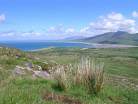
Ireland and the Ryder Cup are great, but this is the most expensive place I've ever been.
Hotel room: $400 a night
Cup of bad coffee in the lobby about the size of a small Dixie cup: $3.10
Diet Coke: $3.10
Snickers: $2.50
Small muffin: $2.50
Breakfast/lunch in the media center: $12.80
Pint of Guiness: $5.10
On and on it goes. Fortunately, it's not my money, but I still feel guilty about spending it.
I've also never seen anything like the weather here. In the span of a half hour, it goes from bright and sunny to black as night and raining sideways to back to bright and sunny. It goes through that cycle about four times a day. The Irish people are quite apologetic about it. They worry that the Ryder Cup will never return because of the weather.
I was thumbing through one of the papers the other day, the Irish Examiner, when I came across a 20-page special section on the upcoming National and World Ploughing Championships. I'm telling you, it rivaled any Eagles season preview section the Inqurier puts out. I had no idea there were 17 categories of ploughing (or plowing, as we spell it).
A word about the Guiness over here. It is so superior to anything I have ever had back home, it's not funny. Thick, rich, dark as motor oil, goes down so smoothly I almost had a tear running down my cheek.
If you don't like potatoes, don't bother coming to Ireland. Potatoes for breakfast, two or three different kinds of pototoes for lunch, more potatoes for dinner. Order a pint of Guiness and you half-expect them to ask, "Want a side of potatoes with that?"
TV sucks. It's 20 years behind the U.S.
I'm staying in one of the official media hotels, the Green Isle. So is Rick Reilly from Sports Illustrated, who sits directly behind me in the media center. He keepings calling it the "Green Mile," from the prison movie of the same name.
Thursday, September 21, 2006
Thursday practice pairings
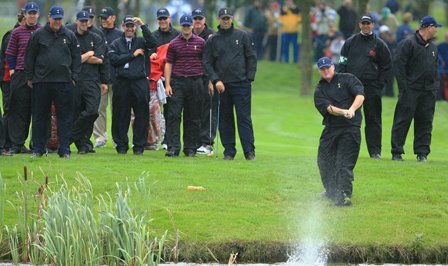
The Americans are already on the course for their final practice this morning. Captain Tom Lehman has sent out the following pairings, which he'll surely stick with for at least tomorrow:
Tiger Woods and Jim Furyk
Phil Mickelson and Chris DiMarco
David Toms and Brett Wetterich
Chad Campbell and Zach Johnson
Stewart Cink and Vaughn Taylor
J.J. Henry and Scott Verplank
Tuesday, September 12, 2006
Tiger's latest newsletter
September 11, 2006
By Tiger Woods
I've been on a great run the last two months and I hope it continues this week at the HSBC World Match Play Championship in Surrey, England. All my hard work is paying off, although there is still plenty of room for improvement. People keep asking how this streak compares to 1999-2000, when I won six PGA Tour tournaments in a row. Even though I've only won five-straight, I know I'm a better player. I can hit more shots, control my trajectory and am much smarter about how I manage my game.
I have always said my career is a work in progress. If you stand still, somebody goes past you. That's why I continue to refine my swing with Hank Haney, trying to become the most complete and consistent player I can be. The day I stop trying to improve is the day I walk away from the sport.
Next week is the Ryder Cup at The K Club in Ireland. Tom Lehman, our U.S. captain, recently arranged a two-day trip there for us to bond and learn the course, and it was a great experience. It was especially good for our rookies - J.J. Henry, Zach Johnson, Vaughn Taylor and Brett Wetterich - to get comfortable with the guys. We're all about the same age, so we can all relate. This is my fifth Ryder Cup team, so I'll take on more of a leadership role.
None of us know for sure what pairings captain Lehman has in mind. He might pair people based on how they are playing next week. We'll just have to wait and see. I would love to have the opportunity to tee it up with Jim Furyk. The guy is a stud and pulled out a great win at the Bell Canadian on Sunday. We teamed up well last year in the Presidents Cup and hopefully we'll get chance to do it again at The K Club.
The golf course is pretty easy to learn; it's not real tricky. It's hard to see the bottom of the cups on a couple holes and there are a couple blind tee shots. We all hit the ball about the same. Whoever putts the best will win the cup.
There has been a lot of discussion about the bogey I made on the ninth hole during the second round of the WGC-Bridgestone Invitational at Firestone Country Club. After hitting my drive into the right rough, I had about 167 yards to the green and hit a 9-iron. The ball flew the green, landed on a cement walkway in front of the clubhouse, then bounced over the roof.
I thought the ball was out of bounds. I waited in the fairway to get a ruling from PGA Tour official Mark Russell, who came up to me and said, 'It's in play.' I was as surprised as anybody when I got a free drop because the grandstands behind the green were considered a temporary immovable object, but I didn't make the rule.
It was a great break. You can't hit every fairway and make every putt. If I had to re-drop from where I hit my second shot I would have been lucky to make six. As it turned out, I made a pretty easy 5 and almost made 4. What a par that would have been!
Some golf fans have questioned me for not playing in last week's Bell Canadian Open. If I had played, it would have meant seven weeks in a row - three weeks in the U.S., plus a trip to Ireland, then three weeks in Europe. That's just too much wear and tear on my body.
I have some great memories of Canada, especially the 18th hole at Glen Abbey when I won in 2000. Every time I have played in Canada, I have received amazing support from the crowds. Hopefully, I can return in the future.
People have asked why I tape the middle finger of my right hand when I play. I've got a callous that's unreal. During the summer in the hot, humid weather, it just tears apart when I practice, so I tape it.
My wife Elin and I attended the U.S. Open tennis finals on Sunday in New York and had a blast. We were guests of Roger Federer, who I finally met in person before the match against Andy Roddick. We both represent Nike and are represented by IMG, so we've communicated before. He's an extraordinary athlete and a great champion. About two weeks ago he invited me to the finals - if he made it - and I said sure. I've been to other tennis tournaments before, but never the U.S. Open. I can't believe how hard those guys hit the ball. I always enjoy watching the best athletes in the world compete. Afterward, I congratulated both players in the locker room and hung out for a while.
On October 7th, Glenn Frey, Joe Walsh and Friends will perform at our annual Block Party at The Grove in Anaheim, Ca. My friend Kevin James will emcee the event and renowned chef Bobby Flay will do the cooking. Proceeds benefit the TWLC. I'm looking forward to being back in Orange County and raising funds for our programs. It should be a great time.
Before I go, I want to express my deepest sympathies to those who lost family and friends in the 9/11 tragedy. My thoughts are with you.
By Tiger Woods
I've been on a great run the last two months and I hope it continues this week at the HSBC World Match Play Championship in Surrey, England. All my hard work is paying off, although there is still plenty of room for improvement. People keep asking how this streak compares to 1999-2000, when I won six PGA Tour tournaments in a row. Even though I've only won five-straight, I know I'm a better player. I can hit more shots, control my trajectory and am much smarter about how I manage my game.
I have always said my career is a work in progress. If you stand still, somebody goes past you. That's why I continue to refine my swing with Hank Haney, trying to become the most complete and consistent player I can be. The day I stop trying to improve is the day I walk away from the sport.
Next week is the Ryder Cup at The K Club in Ireland. Tom Lehman, our U.S. captain, recently arranged a two-day trip there for us to bond and learn the course, and it was a great experience. It was especially good for our rookies - J.J. Henry, Zach Johnson, Vaughn Taylor and Brett Wetterich - to get comfortable with the guys. We're all about the same age, so we can all relate. This is my fifth Ryder Cup team, so I'll take on more of a leadership role.
None of us know for sure what pairings captain Lehman has in mind. He might pair people based on how they are playing next week. We'll just have to wait and see. I would love to have the opportunity to tee it up with Jim Furyk. The guy is a stud and pulled out a great win at the Bell Canadian on Sunday. We teamed up well last year in the Presidents Cup and hopefully we'll get chance to do it again at The K Club.
The golf course is pretty easy to learn; it's not real tricky. It's hard to see the bottom of the cups on a couple holes and there are a couple blind tee shots. We all hit the ball about the same. Whoever putts the best will win the cup.
There has been a lot of discussion about the bogey I made on the ninth hole during the second round of the WGC-Bridgestone Invitational at Firestone Country Club. After hitting my drive into the right rough, I had about 167 yards to the green and hit a 9-iron. The ball flew the green, landed on a cement walkway in front of the clubhouse, then bounced over the roof.
I thought the ball was out of bounds. I waited in the fairway to get a ruling from PGA Tour official Mark Russell, who came up to me and said, 'It's in play.' I was as surprised as anybody when I got a free drop because the grandstands behind the green were considered a temporary immovable object, but I didn't make the rule.
It was a great break. You can't hit every fairway and make every putt. If I had to re-drop from where I hit my second shot I would have been lucky to make six. As it turned out, I made a pretty easy 5 and almost made 4. What a par that would have been!
Some golf fans have questioned me for not playing in last week's Bell Canadian Open. If I had played, it would have meant seven weeks in a row - three weeks in the U.S., plus a trip to Ireland, then three weeks in Europe. That's just too much wear and tear on my body.
I have some great memories of Canada, especially the 18th hole at Glen Abbey when I won in 2000. Every time I have played in Canada, I have received amazing support from the crowds. Hopefully, I can return in the future.
People have asked why I tape the middle finger of my right hand when I play. I've got a callous that's unreal. During the summer in the hot, humid weather, it just tears apart when I practice, so I tape it.
My wife Elin and I attended the U.S. Open tennis finals on Sunday in New York and had a blast. We were guests of Roger Federer, who I finally met in person before the match against Andy Roddick. We both represent Nike and are represented by IMG, so we've communicated before. He's an extraordinary athlete and a great champion. About two weeks ago he invited me to the finals - if he made it - and I said sure. I've been to other tennis tournaments before, but never the U.S. Open. I can't believe how hard those guys hit the ball. I always enjoy watching the best athletes in the world compete. Afterward, I congratulated both players in the locker room and hung out for a while.
On October 7th, Glenn Frey, Joe Walsh and Friends will perform at our annual Block Party at The Grove in Anaheim, Ca. My friend Kevin James will emcee the event and renowned chef Bobby Flay will do the cooking. Proceeds benefit the TWLC. I'm looking forward to being back in Orange County and raising funds for our programs. It should be a great time.
Before I go, I want to express my deepest sympathies to those who lost family and friends in the 9/11 tragedy. My thoughts are with you.
Monday, September 11, 2006
O'Hair 3rd at Canadian Open
Having his father-in-law Steve Lucas back on the bag must be the magic formula for Sean O'Hair.
O'Hair, 24, from West Chester finished alone in 3rd at this week's Bell Canadian Open, after firing rounds of 65- 69-66-68 for a total of 12-under par. It was his best finish for 2006, and his second top 10 (after his 4th at the Buick in early Augusta). The $340,000 payday raised his earning for his sophomore season to $1.33 million.
Here's his post-tourney interview:
PGA Tour: Sean O'Hair, thanks for joining us here. Nice round today. Looks like you're going to come up a little bit short, especially a tough finish there with the lip out there on the 17th hole. But overall a good week and it looks like your game is really coming back. Maybe some opening comments about the day.
SEAN O'HAIR: Yeah. It was a little bit of a frustrating day, as well as I hit the ball. I felt like I was in such control of my ball flight today. With the wind, there was a lot of cross breezes, and I was able to shape it up against the wind, ride the wind, control my trajectory, and some of those pins were hard to get to. But my short game kind of let me down a little bit on a few holes on the front, and I misjudged the wind on 2, and I actually hit a good shot and I played the best I could today, and unfortunately it was a little bit short.
PGA Tour: Looks like you made good putts there on 17, and on 18 you made a good run at it, too.
SEAN O'HAIR: Yeah, I don't see how that one at 17 missed. I mean, that thing was in the hole and then just dove and missed low. That was a little bit frustrating because I actually felt like I was playing more break than I needed to, and I just was trying to get the right speed so it would take the break, and it broke more than I thought.
I hit a great drive on that hole, and unfortunately I hit a poor second shot. But if you're going to hit bad shots I made a great bunker shot and made a great putt and ended up making par. That was pretty much it because if I put myself in the position where I've got to make birdie on 18, I know that more than half the time I'm going to do it. That was very frustrating.
PGA Tour: And then knowing you were two shots back on 18, what do you do there?
SEAN O'HAIR: It was a tough shot because I just the wind was going pretty hard left to right, but I wasn't going to play it into the bleachers and hopefully the wind takes it. I didn't feel like that was the shot. I wanted to play kind of a low draw up against into the wind and I just kind of came out of it a little bit. That was actually my bread and butter this week was that little punch draw. I was doing it all day today and I felt great over the ball, I just made a bad swing.
That was a tough bunker shot and I managed to hit a little chunk and run, which was nice. I wish it would have ran out a little bit better. But I played my heart out on the back nine. That's all I can do.
Q. You're frustrated now. How long does this last? Tomorrow morning will everything be normal or are you still going to be reviewing shots in your mind for the next who knows how long?
SEAN O'HAIR: I'm not going to take this as a disappointment. I've played good this week, and this year hasn't been the greatest year for me. Things are starting to come around, and I can't look at this as a negative. I mean, this is only a positive. I've got to move on with it and go from there.
Q. You obviously didn't have a chance to see what was going on with Furyk, but to not be able to catch a guy like him cannot be all that disappointing. He looked like he was in pretty good control of his game, as well.
SEAN O'HAIR: You know, he's I mean, his play this year speaks for itself. I don't think anybody is uncatchable. You know, I'm not even close to being the caliber player yet that Jim Furyk is now. But if I'm out there thinking that he's uncatchable, I might as well pack it in. I thought he was very catchable, and if I just a few putts fell for me on the back nine, and if I made a few better decisions on the front nine, I'm right there.
You know, in a way I'm a little bit disappointed with as well as I hit the ball today that I only shot 2 under, but this week is an absolute, 100 percent positive, and that's how I'm going to take it. I'm not going to look at it as a negative. Like I said, I played with everything I had and just was a little bit short, and I'm going to learn from it and hopefully take it into next week. I'm playing next week, and you never know.
Q. Are you the type of guy that takes something like this not into next week even but as well into next year? What I mean by that is when you look at your schedule at the end of this year, you see the Canadian Open coming up next year, different day, different venue. Do you think back on what this was as a positive experience, and does that influence your thinking about whether you play or whether you don't play?
SEAN O'HAIR: In a way it does, yes. I know that it's at a different golf course and I'm not familiar this is my first trip here, so I don't know how that golf course suits me or how that golf course plays or whatever. But Canadian Open is a top notch event in my opinion. It's the National Open for Canada. I look at it as a big event.
I haven't really looked at the schedule for next year yet because I'm still trying to finish this one out, but I really hope it fits into my schedule, and if it does, I'll definitely play.
O'Hair, 24, from West Chester finished alone in 3rd at this week's Bell Canadian Open, after firing rounds of 65- 69-66-68 for a total of 12-under par. It was his best finish for 2006, and his second top 10 (after his 4th at the Buick in early Augusta). The $340,000 payday raised his earning for his sophomore season to $1.33 million.
Here's his post-tourney interview:
PGA Tour: Sean O'Hair, thanks for joining us here. Nice round today. Looks like you're going to come up a little bit short, especially a tough finish there with the lip out there on the 17th hole. But overall a good week and it looks like your game is really coming back. Maybe some opening comments about the day.
SEAN O'HAIR: Yeah. It was a little bit of a frustrating day, as well as I hit the ball. I felt like I was in such control of my ball flight today. With the wind, there was a lot of cross breezes, and I was able to shape it up against the wind, ride the wind, control my trajectory, and some of those pins were hard to get to. But my short game kind of let me down a little bit on a few holes on the front, and I misjudged the wind on 2, and I actually hit a good shot and I played the best I could today, and unfortunately it was a little bit short.
PGA Tour: Looks like you made good putts there on 17, and on 18 you made a good run at it, too.
SEAN O'HAIR: Yeah, I don't see how that one at 17 missed. I mean, that thing was in the hole and then just dove and missed low. That was a little bit frustrating because I actually felt like I was playing more break than I needed to, and I just was trying to get the right speed so it would take the break, and it broke more than I thought.
I hit a great drive on that hole, and unfortunately I hit a poor second shot. But if you're going to hit bad shots I made a great bunker shot and made a great putt and ended up making par. That was pretty much it because if I put myself in the position where I've got to make birdie on 18, I know that more than half the time I'm going to do it. That was very frustrating.
PGA Tour: And then knowing you were two shots back on 18, what do you do there?
SEAN O'HAIR: It was a tough shot because I just the wind was going pretty hard left to right, but I wasn't going to play it into the bleachers and hopefully the wind takes it. I didn't feel like that was the shot. I wanted to play kind of a low draw up against into the wind and I just kind of came out of it a little bit. That was actually my bread and butter this week was that little punch draw. I was doing it all day today and I felt great over the ball, I just made a bad swing.
That was a tough bunker shot and I managed to hit a little chunk and run, which was nice. I wish it would have ran out a little bit better. But I played my heart out on the back nine. That's all I can do.
Q. You're frustrated now. How long does this last? Tomorrow morning will everything be normal or are you still going to be reviewing shots in your mind for the next who knows how long?
SEAN O'HAIR: I'm not going to take this as a disappointment. I've played good this week, and this year hasn't been the greatest year for me. Things are starting to come around, and I can't look at this as a negative. I mean, this is only a positive. I've got to move on with it and go from there.
Q. You obviously didn't have a chance to see what was going on with Furyk, but to not be able to catch a guy like him cannot be all that disappointing. He looked like he was in pretty good control of his game, as well.
SEAN O'HAIR: You know, he's I mean, his play this year speaks for itself. I don't think anybody is uncatchable. You know, I'm not even close to being the caliber player yet that Jim Furyk is now. But if I'm out there thinking that he's uncatchable, I might as well pack it in. I thought he was very catchable, and if I just a few putts fell for me on the back nine, and if I made a few better decisions on the front nine, I'm right there.
You know, in a way I'm a little bit disappointed with as well as I hit the ball today that I only shot 2 under, but this week is an absolute, 100 percent positive, and that's how I'm going to take it. I'm not going to look at it as a negative. Like I said, I played with everything I had and just was a little bit short, and I'm going to learn from it and hopefully take it into next week. I'm playing next week, and you never know.
Q. Are you the type of guy that takes something like this not into next week even but as well into next year? What I mean by that is when you look at your schedule at the end of this year, you see the Canadian Open coming up next year, different day, different venue. Do you think back on what this was as a positive experience, and does that influence your thinking about whether you play or whether you don't play?
SEAN O'HAIR: In a way it does, yes. I know that it's at a different golf course and I'm not familiar this is my first trip here, so I don't know how that golf course suits me or how that golf course plays or whatever. But Canadian Open is a top notch event in my opinion. It's the National Open for Canada. I look at it as a big event.
I haven't really looked at the schedule for next year yet because I'm still trying to finish this one out, but I really hope it fits into my schedule, and if it does, I'll definitely play.
Wednesday, September 06, 2006

Wie defends herself

CRANS-SUR-SIERRE, Switzerland - Teenage prodigy Michelle Wie defended her right to compete on the men’s tour and said she wanted to play in the Ryder Cup some day as she prepared for this week’s European Masters.
For the whole story, click here.
Tuesday, September 05, 2006
Tiger's 5 in a Row: The interview
Excerpts from Tiger's post-victory interview after his 5th straight win in a row at the Deutche Bank Championship.
TIGER WOODS
PGA Tour: The 2006 Deutsche Bank champion, Tiger Woods. Five in a row. You went out there and took charge pretty quickly. Why don't you just talk about the day.
TIGER WOODS: Well, I hit it good today. I got off to a quick start. I eagled missed a short one on No. 1, eagled 2, and birdied 3. And I didn't think I would get all of them back within the first three holes, but the par 5 No. 2 playing downwind, with the length that Vijay and I both have, put the ball in the fairway and you can have an iron to the green.
And he missed the fairway there and I made eagle there and just got all the momentum. I got back two shots instead of basically feeling all square.
Made a nice putt at the third and then all of a sudden I had all the momentum on my side and just tried to continue doing what I was doing. Hitting the ball well and making some putts.
PGA Tour: Questions, please.
Q. You go to the 7th hole and just take us through that shot. I got to believe that was a pretty good shot?
TIGER WOODS: Yeah, I hit that good. But it was basically possibly a full 5 wood there, but I just, I wanted to hit 3 wood and make sure that the pin was up front so I figure if I missed it long over the green it's fine. I had the angle coming back.
And I hit it, I hit it really low and hot, so I figured it would roll over the back. But it landed right into the bank. And the bank just killed it. And it took all the momentum off of it and it just rolled up on the green. So that was a huge bonus, because that shot should have been over the green.
Q. At that point it looks like you're in decent shape in terms of building your lead then he his a tremendous shot out of bunker to nothing. Would you talk about the importance of making that putt?
TIGER WOODS: Yeah, I thought I was in control of the hole. And was going to basically I had the lead there. And all of a sudden he hits it just a great golf shot. And it's a shot that he practices quite a bit, actually. He goes in a lot of the fairway bunkers and hits those wedges and mid irons and practices that shot a lot. And it wasn't a real big surprise that he hit it close, but the kick in was pretty sweet. It was a pretty sweet shot. So if I make my putt, again, I have all, I take all of his momentum away from him; and I knocked it right in there.
Q. On Friday and Saturday on hole No. 2 you both pushed your shot way left. Coming in today, what was your thought process and exactly how close were you trying to get on that shot.
TIGER WOODS: No, I actually missed my tee shot that I hit terrible there the first couple days. And today the wind was down off the left and I just peeled it down there and hit it right in the middle of the fairway. And the second shot was 206 yards blowing down off the left and I hit a full 6 iron. Just aimed right at it and if I miss it, miss it right. Because obviously it's shorter on the right hand side. And even if it falls down the hill, that's fine. I can 2 putt from down there. And it just started to bleed a little bit to the right and hit soft and stayed up, which was a big bonus. Because then I had actually a makeable putt for eagle.
Q. You talked about the change of momentum and it happened so quickly starting with that second hole, but how can you feel the momentum changing? Is it by body language of Vijay or do you feel it yourself or the crowd's reaction?
TIGER WOODS: Generally I just feel it myself. Vijay's a player who he's so he's a veteran player, he's been there so many times, he's not going to show you through body language. He knows what to do. So it wasn't that. I just felt by making eagle and basically stealing two there, two strokes from him on his lead, I had all the momentum on my side. And then I stuffed it on the third hole and made that putt. And all of a sudden it was, now we're all squared, now we can basically play our tournament from here.
I just had to run him down as fast as possible, try to at least get him by the front nine was over. But I was able to do it within three holes.
Q. (Inaudible.)
TIGER WOODS: Well with, he's won a bunch of golf tournaments, not only here in the United States, but all over the world. And he's one of the most consistent players there is on our TOUR, actually in the world. So you know Vijay's not going to make a lot of mistakes. And he knows how to manage his game and get it around. So, but still I still think one of the hardest things to do in our sport is follow up a great round with another great round. It's one of the most difficult things, I don't know why that is or we're still trying to figure that out ourselves. So I just kept thinking that if Vijay shot something in the high 60s, figured mid 60s would either get me in a playoff or win it. And that was what I had in mind today and I was able to actually go a little bit lower than that.
Q. When do you go for six in a row, and could you talk about 15. Vijay hit it in real close there and you were able to get a birdie.
TIGER WOODS: When do I go for six? In two weeks. I play the Match Play and then play the Ryder Cup and then I play the American Express championship. So three weeks in Europe right in a row.
15? Yeah, that was a big momentum, again, keeping it on my side. Because anything can still have, could still happen. I make my putt, at the time I had a two shot lead, if I miss, he makes, one shot lead with 17, which is a pretty easy well if you drive the ball in the fairway you feel like you can make birdie there. And then 18 you can make three pretty easily there as well. So I needed to keep that lead at two. And I was able to make that putt and basically took all the momentum away from Vijay, when he could have easily cut my lead in half it stayed the same.
Q. We heard you say in the past if you're not getting better you're getting worse. But the way you're playing right now, what could you possibly be working on now?
TIGER WOODS: Everything. Everything can always be better. This game is fluid. It's always changing, it's always evolving and you can always get better. That's the great thing about it. You can get better tomorrow than you are today.
Q. Completely satisfied with anything right now?
TIGER WOODS: I could always hit the ball better, chip better, putt better, think better, yeah. Other than that, yeah.
Q. Along those lines, when you look at how you had to patch together a 72 a couple days ago, not hitting it very well and going through a stretch like you did in Akron where it wasn't that sharp for a period, in some ways is it more satisfying when you battle your way through and win on a week like this when everything doesn't click for 72 holes?
TIGER WOODS: Well, it's a hell of a lot harder to do. I just wish that the big leads and the big ones are a lot easier on the system. But weeks like this you really find out a lot about yourself and how to manage yourself around the golf course. And you have to dig down deep to find something. A lot of times you just don't have it and you just got to find a way to keep your self in the tournament.
And that second round I kept myself in the tournament. Could have easily shot myself right out of the tournament. But I hung in there and gutted it out and all of a sudden I was only two back when it could have easily been five, six, seven, eight back and would have been really asking for a lot to get back in the tournament, the way I was hitting it.
Q. It's almost ten years exactly since your debut, could you even imagine ten years of what you've done in these ten years?
TIGER WOODS: Nope. No. Hey, over that ten year span you're just hoping to keep your card for that long and stay out here and win tournaments and hopefully if everything goes right to win Major championships. I just got off to such a quick start in my career by winning twice in the fall of '96 and then to win the Masters in my first go round, in my first Major, just gave my whole career as a professional just a great shot of momentum and confidence. That I could do it. And from there I could always rely on that experience to carry me forth in the future.
Q. This is on a short list of tournaments that you hadn't won, even though you played it a couple times, did that weigh on you at all, you had the affiliation with the tournament and you had done well, but you hadn't won here?
TIGER WOODS: I didn't really look at it that way, no. I really wanted to play well and win this tournament, obviously, for the foundation, and the things that we're trying to do and the money we're trying to raise to better chances of our youth. So for me to win this golf tournament I think it's just, it adds more I guess the word was exposure to what we're trying to do and trying to accomplish with our foundation.
So for me I think that's probably the most important thing is that people are now becoming aware of what we're trying to do. And the tournament and the fans and Deutsche Bank and that really help us to do that, because now we're able to touch more lives.
Q. Do you ever think about 11 in a row?
TIGER WOODS: Yeah.
(Laughter.) It wasn't just 11, it was 11 in a row, 12 out of 13, 18 for the year. That will work.
Q. You don't even play 18, do you?
(Laughter.)
TIGER WOODS: Good point.
(Laughter.)
Q. Kind of along those lines, where do you see Byron's record, the 11 in a row, as it relates to UCLA or some of the other or some of the other great streaks in sports?
TIGER WOODS: Well, I think it's part of the streak that it's probably the streak that I've, he had to have so many things go right first of all. In this day and age and the competition, to win 11 in a row would almost be unheard of. What Byron accomplished, that right there goes down to probably one of the greatest years in the history of our sport. Consistency I mean you got to have one bad week somewhere. He never did. His bad week was a win, I guess. So it's I mean it's truly amazing. I know that there were a lot of different circumstances. It was one of those, the field's weren't as strong, it was one of the war years, but still, I just think that what Byron accomplished there goes down as one of the greatest streaks in all of sport. I don't know what DiMaggio's record, I see that being broken more so than winning 11 golf tournaments.
Q. (Inaudible.)
TIGER WOODS: Is it doable? Yeah, it's doable, you know, if a lot of guys pull out.
(Laughter.)
Q. With all the success you've had, including financially, how do you maintain your competitive drive and avoid a sense of complacency?
TIGER WOODS: Work hard.
Q. It would be easy to sit back and say, "I got everything I want, I got 12 Majors." You've seen athletes, you've been around long enough, it's such attribute to you that you are still really wanting to win.
TIGER WOODS: Well, you know, yeah, I'm a competitor, all right. And I love to compete. I love to mix it up. I like to go toe to toe, eyeball to eyeball, that to me is fun. And I love to feel that rush of getting out there and trying to beat everybody. That to me is fun. And there's no better place than the back nine on Sunday at a Major championship to go get in that arena. And that's what we as players, that's what we practice all those hours, all of those hours in the gym, run all those miles on the road, is to be in that position, to feel that rush, to win.
Q. Along those lines of motivation, was there any revenge today from what happened two years ago and did that help drive you today?
TIGER WOODS: No, not at all. Vijay just flat out outplayed me last time. I had an opportunity and I bogeyed what? 14 there and made a mistake and then he birdied 15 and it was basically over.
This year I just felt that I was playing well enough to catch Vijay on that front nine and I was able to do it earlier than I thought I would, but I was still able to get the lead on the front nine, which was a huge bonus and basically play a little bit more conservative on the back nine and it forced Vijay to try to make birdies.
Q. Curious as we look ahead, you got a week off and then Wentworth, Ryder Cup, Am Ex and then I'm sure you've got a fairly full fall schedule, post whatever it's called.
TIGER WOODS: Right.
Q. We'll leave it at that. What do you think you'll do the rest of the year TOUR wise? Is there a chance you'll miss Disney?
TIGER WOODS: I don't know.
Q. Where would you put your performance today? I think we're going to need Joan's help. Someone mentioned that 63 is your lowest Sunday round to win a tournament. Where would you rank it?
TIGER WOODS: Is it?
Q. Today I guess we'll ask for help.
TIGER WOODS: To win a tournament?
Q. To win the tournament. And in your own mind, what are your top three performances ever?
TIGER WOODS: Ever?
(Laughter.) Can I just put tournaments instead?
Q. Sure.
TIGER WOODS: Okay. Not in any particular order, so. Probably '97 Masters, 2000 U.S. Open, probably 2000 British.
Q. (Inaudible.)
TIGER WOODS: What about today?
Q. (Inaudible.)
TIGER WOODS: No.
(Laughter.) I got 12 Majors there, so.
Q. For years now there have been so many comparisons to 2000. Can you ever get back to it.
TIGER WOODS: Right.
Q. Is it doable again. What are your thoughts on that now and do you see any difference in the way you're playing that you could compare with that stretch?
TIGER WOODS: Well, people are always asking me that, just like you just did. And I just think that if you're looking for blow out wins to compare the two, there's only a couple tournaments that you can possibly blow out anybody in. One would be the U.S. Open, because if you play great rounds of golf, it's hard for the other guys to do the same. You're going to have you have to have difficult golf courses and play great in order to have blow outs.
I think that's what people are always looking to compare 2000 to now. Said, yeah, he's winning but he's not winning by as big of margins. But I'm still getting W's.
Q. Could you make an argument then that this is almost more impressive, the fact that you're at 50 percent right now on TOUR, in wins, and that's about what it was in 2000, almost a more impressive performance in your eyes?
TIGER WOODS: In a sense. Just because I think everyone's improved. Everyone's gotten better. You can't compare the two because in a sense everyone's gotten better. I've gotten better, the rest of the guys have gotten better. Technology's gotten better. It's just evolved. And that's one of the more difficult things is to try and compare generations and obviously even in my little section of my career to compare the two. Because it keeps evolving. It's not like in baseball where they all got wooden bats and it stays wooden bats. It's hard to compare the two sometimes.
TIGER WOODS
PGA Tour: The 2006 Deutsche Bank champion, Tiger Woods. Five in a row. You went out there and took charge pretty quickly. Why don't you just talk about the day.
TIGER WOODS: Well, I hit it good today. I got off to a quick start. I eagled missed a short one on No. 1, eagled 2, and birdied 3. And I didn't think I would get all of them back within the first three holes, but the par 5 No. 2 playing downwind, with the length that Vijay and I both have, put the ball in the fairway and you can have an iron to the green.
And he missed the fairway there and I made eagle there and just got all the momentum. I got back two shots instead of basically feeling all square.
Made a nice putt at the third and then all of a sudden I had all the momentum on my side and just tried to continue doing what I was doing. Hitting the ball well and making some putts.
PGA Tour: Questions, please.
Q. You go to the 7th hole and just take us through that shot. I got to believe that was a pretty good shot?
TIGER WOODS: Yeah, I hit that good. But it was basically possibly a full 5 wood there, but I just, I wanted to hit 3 wood and make sure that the pin was up front so I figure if I missed it long over the green it's fine. I had the angle coming back.
And I hit it, I hit it really low and hot, so I figured it would roll over the back. But it landed right into the bank. And the bank just killed it. And it took all the momentum off of it and it just rolled up on the green. So that was a huge bonus, because that shot should have been over the green.
Q. At that point it looks like you're in decent shape in terms of building your lead then he his a tremendous shot out of bunker to nothing. Would you talk about the importance of making that putt?
TIGER WOODS: Yeah, I thought I was in control of the hole. And was going to basically I had the lead there. And all of a sudden he hits it just a great golf shot. And it's a shot that he practices quite a bit, actually. He goes in a lot of the fairway bunkers and hits those wedges and mid irons and practices that shot a lot. And it wasn't a real big surprise that he hit it close, but the kick in was pretty sweet. It was a pretty sweet shot. So if I make my putt, again, I have all, I take all of his momentum away from him; and I knocked it right in there.
Q. On Friday and Saturday on hole No. 2 you both pushed your shot way left. Coming in today, what was your thought process and exactly how close were you trying to get on that shot.
TIGER WOODS: No, I actually missed my tee shot that I hit terrible there the first couple days. And today the wind was down off the left and I just peeled it down there and hit it right in the middle of the fairway. And the second shot was 206 yards blowing down off the left and I hit a full 6 iron. Just aimed right at it and if I miss it, miss it right. Because obviously it's shorter on the right hand side. And even if it falls down the hill, that's fine. I can 2 putt from down there. And it just started to bleed a little bit to the right and hit soft and stayed up, which was a big bonus. Because then I had actually a makeable putt for eagle.
Q. You talked about the change of momentum and it happened so quickly starting with that second hole, but how can you feel the momentum changing? Is it by body language of Vijay or do you feel it yourself or the crowd's reaction?
TIGER WOODS: Generally I just feel it myself. Vijay's a player who he's so he's a veteran player, he's been there so many times, he's not going to show you through body language. He knows what to do. So it wasn't that. I just felt by making eagle and basically stealing two there, two strokes from him on his lead, I had all the momentum on my side. And then I stuffed it on the third hole and made that putt. And all of a sudden it was, now we're all squared, now we can basically play our tournament from here.
I just had to run him down as fast as possible, try to at least get him by the front nine was over. But I was able to do it within three holes.
Q. (Inaudible.)
TIGER WOODS: Well with, he's won a bunch of golf tournaments, not only here in the United States, but all over the world. And he's one of the most consistent players there is on our TOUR, actually in the world. So you know Vijay's not going to make a lot of mistakes. And he knows how to manage his game and get it around. So, but still I still think one of the hardest things to do in our sport is follow up a great round with another great round. It's one of the most difficult things, I don't know why that is or we're still trying to figure that out ourselves. So I just kept thinking that if Vijay shot something in the high 60s, figured mid 60s would either get me in a playoff or win it. And that was what I had in mind today and I was able to actually go a little bit lower than that.
Q. When do you go for six in a row, and could you talk about 15. Vijay hit it in real close there and you were able to get a birdie.
TIGER WOODS: When do I go for six? In two weeks. I play the Match Play and then play the Ryder Cup and then I play the American Express championship. So three weeks in Europe right in a row.
15? Yeah, that was a big momentum, again, keeping it on my side. Because anything can still have, could still happen. I make my putt, at the time I had a two shot lead, if I miss, he makes, one shot lead with 17, which is a pretty easy well if you drive the ball in the fairway you feel like you can make birdie there. And then 18 you can make three pretty easily there as well. So I needed to keep that lead at two. And I was able to make that putt and basically took all the momentum away from Vijay, when he could have easily cut my lead in half it stayed the same.
Q. We heard you say in the past if you're not getting better you're getting worse. But the way you're playing right now, what could you possibly be working on now?
TIGER WOODS: Everything. Everything can always be better. This game is fluid. It's always changing, it's always evolving and you can always get better. That's the great thing about it. You can get better tomorrow than you are today.
Q. Completely satisfied with anything right now?
TIGER WOODS: I could always hit the ball better, chip better, putt better, think better, yeah. Other than that, yeah.
Q. Along those lines, when you look at how you had to patch together a 72 a couple days ago, not hitting it very well and going through a stretch like you did in Akron where it wasn't that sharp for a period, in some ways is it more satisfying when you battle your way through and win on a week like this when everything doesn't click for 72 holes?
TIGER WOODS: Well, it's a hell of a lot harder to do. I just wish that the big leads and the big ones are a lot easier on the system. But weeks like this you really find out a lot about yourself and how to manage yourself around the golf course. And you have to dig down deep to find something. A lot of times you just don't have it and you just got to find a way to keep your self in the tournament.
And that second round I kept myself in the tournament. Could have easily shot myself right out of the tournament. But I hung in there and gutted it out and all of a sudden I was only two back when it could have easily been five, six, seven, eight back and would have been really asking for a lot to get back in the tournament, the way I was hitting it.
Q. It's almost ten years exactly since your debut, could you even imagine ten years of what you've done in these ten years?
TIGER WOODS: Nope. No. Hey, over that ten year span you're just hoping to keep your card for that long and stay out here and win tournaments and hopefully if everything goes right to win Major championships. I just got off to such a quick start in my career by winning twice in the fall of '96 and then to win the Masters in my first go round, in my first Major, just gave my whole career as a professional just a great shot of momentum and confidence. That I could do it. And from there I could always rely on that experience to carry me forth in the future.
Q. This is on a short list of tournaments that you hadn't won, even though you played it a couple times, did that weigh on you at all, you had the affiliation with the tournament and you had done well, but you hadn't won here?
TIGER WOODS: I didn't really look at it that way, no. I really wanted to play well and win this tournament, obviously, for the foundation, and the things that we're trying to do and the money we're trying to raise to better chances of our youth. So for me to win this golf tournament I think it's just, it adds more I guess the word was exposure to what we're trying to do and trying to accomplish with our foundation.
So for me I think that's probably the most important thing is that people are now becoming aware of what we're trying to do. And the tournament and the fans and Deutsche Bank and that really help us to do that, because now we're able to touch more lives.
Q. Do you ever think about 11 in a row?
TIGER WOODS: Yeah.
(Laughter.) It wasn't just 11, it was 11 in a row, 12 out of 13, 18 for the year. That will work.
Q. You don't even play 18, do you?
(Laughter.)
TIGER WOODS: Good point.
(Laughter.)
Q. Kind of along those lines, where do you see Byron's record, the 11 in a row, as it relates to UCLA or some of the other or some of the other great streaks in sports?
TIGER WOODS: Well, I think it's part of the streak that it's probably the streak that I've, he had to have so many things go right first of all. In this day and age and the competition, to win 11 in a row would almost be unheard of. What Byron accomplished, that right there goes down to probably one of the greatest years in the history of our sport. Consistency I mean you got to have one bad week somewhere. He never did. His bad week was a win, I guess. So it's I mean it's truly amazing. I know that there were a lot of different circumstances. It was one of those, the field's weren't as strong, it was one of the war years, but still, I just think that what Byron accomplished there goes down as one of the greatest streaks in all of sport. I don't know what DiMaggio's record, I see that being broken more so than winning 11 golf tournaments.
Q. (Inaudible.)
TIGER WOODS: Is it doable? Yeah, it's doable, you know, if a lot of guys pull out.
(Laughter.)
Q. With all the success you've had, including financially, how do you maintain your competitive drive and avoid a sense of complacency?
TIGER WOODS: Work hard.
Q. It would be easy to sit back and say, "I got everything I want, I got 12 Majors." You've seen athletes, you've been around long enough, it's such attribute to you that you are still really wanting to win.
TIGER WOODS: Well, you know, yeah, I'm a competitor, all right. And I love to compete. I love to mix it up. I like to go toe to toe, eyeball to eyeball, that to me is fun. And I love to feel that rush of getting out there and trying to beat everybody. That to me is fun. And there's no better place than the back nine on Sunday at a Major championship to go get in that arena. And that's what we as players, that's what we practice all those hours, all of those hours in the gym, run all those miles on the road, is to be in that position, to feel that rush, to win.
Q. Along those lines of motivation, was there any revenge today from what happened two years ago and did that help drive you today?
TIGER WOODS: No, not at all. Vijay just flat out outplayed me last time. I had an opportunity and I bogeyed what? 14 there and made a mistake and then he birdied 15 and it was basically over.
This year I just felt that I was playing well enough to catch Vijay on that front nine and I was able to do it earlier than I thought I would, but I was still able to get the lead on the front nine, which was a huge bonus and basically play a little bit more conservative on the back nine and it forced Vijay to try to make birdies.
Q. Curious as we look ahead, you got a week off and then Wentworth, Ryder Cup, Am Ex and then I'm sure you've got a fairly full fall schedule, post whatever it's called.
TIGER WOODS: Right.
Q. We'll leave it at that. What do you think you'll do the rest of the year TOUR wise? Is there a chance you'll miss Disney?
TIGER WOODS: I don't know.
Q. Where would you put your performance today? I think we're going to need Joan's help. Someone mentioned that 63 is your lowest Sunday round to win a tournament. Where would you rank it?
TIGER WOODS: Is it?
Q. Today I guess we'll ask for help.
TIGER WOODS: To win a tournament?
Q. To win the tournament. And in your own mind, what are your top three performances ever?
TIGER WOODS: Ever?
(Laughter.) Can I just put tournaments instead?
Q. Sure.
TIGER WOODS: Okay. Not in any particular order, so. Probably '97 Masters, 2000 U.S. Open, probably 2000 British.
Q. (Inaudible.)
TIGER WOODS: What about today?
Q. (Inaudible.)
TIGER WOODS: No.
(Laughter.) I got 12 Majors there, so.
Q. For years now there have been so many comparisons to 2000. Can you ever get back to it.
TIGER WOODS: Right.
Q. Is it doable again. What are your thoughts on that now and do you see any difference in the way you're playing that you could compare with that stretch?
TIGER WOODS: Well, people are always asking me that, just like you just did. And I just think that if you're looking for blow out wins to compare the two, there's only a couple tournaments that you can possibly blow out anybody in. One would be the U.S. Open, because if you play great rounds of golf, it's hard for the other guys to do the same. You're going to have you have to have difficult golf courses and play great in order to have blow outs.
I think that's what people are always looking to compare 2000 to now. Said, yeah, he's winning but he's not winning by as big of margins. But I'm still getting W's.
Q. Could you make an argument then that this is almost more impressive, the fact that you're at 50 percent right now on TOUR, in wins, and that's about what it was in 2000, almost a more impressive performance in your eyes?
TIGER WOODS: In a sense. Just because I think everyone's improved. Everyone's gotten better. You can't compare the two because in a sense everyone's gotten better. I've gotten better, the rest of the guys have gotten better. Technology's gotten better. It's just evolved. And that's one of the more difficult things is to try and compare generations and obviously even in my little section of my career to compare the two. Because it keeps evolving. It's not like in baseball where they all got wooden bats and it stays wooden bats. It's hard to compare the two sometimes.
Tuesday, August 15, 2006
14-year-old wins Women's Amateur
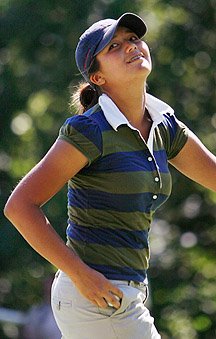
The best girl teenage golfer in Hawaii? How about Kimberly Kim, the 14-year-old who won the U.S. Women's Amateur on Sunday.
Stunning win -- and the kid oozes personality. If Michelle Wie doesn't hear footsteps, she should.
Kim Defies Laws Of Age
By Ken Klavon, USGA
North Plains, Ore. – Kimberly Kim walked off the 18th green of Pumpkin Ridge Golf Club's Witch Hollow Course Sunday and leapt into the arms of history.
Actually, she leaped into the arms of her father. That’s beside the point. Why let figurative prose get in the way of a receptive story? Kim, for the time being, did something no one else has ever done in the U.S. Women's Amateur Championship: win it at 14 years old. Fourteen years old. Aren't most kids that age preoccupied with video games, iPods and the like?
For the rest of the story.
Steriods in golf. Nah. Well, maybe nah.
Good offering from Damon Hack in the NYTimes on the PGA Tour's take on the steriod...er, ah, issue.
By Damon Hack
In the seven years since Tiger Woods won the P.G.A. Championship at Medinah Country Club, the golf course has been yanked at the roots and stretched to 7,561 yards, making it the longest major championship venue ever devised.
Medinah, which will again play host to the P.G.A. Championship, beginning Thursday, is just one more reminder of a sport becoming identified with power — so much so that some players are questioning if golf could one day fall prey to the performance-enhancing drugs that have plagued other sports, if they have not infiltrated golf already.
For the rest of the story.
By Damon Hack
In the seven years since Tiger Woods won the P.G.A. Championship at Medinah Country Club, the golf course has been yanked at the roots and stretched to 7,561 yards, making it the longest major championship venue ever devised.
Medinah, which will again play host to the P.G.A. Championship, beginning Thursday, is just one more reminder of a sport becoming identified with power — so much so that some players are questioning if golf could one day fall prey to the performance-enhancing drugs that have plagued other sports, if they have not infiltrated golf already.
For the rest of the story.
Friday, August 11, 2006
Top 50. Whither young Americans?

If you ever wonder about the state of golf in the U.S., here's a fact to ponder: Among the Top 50 players in the World Golf Rankings, there is not a single American under the age of 30.
There are three 30-year-olds: Tiger Woods (1st), Zach Johnson (36th) and Ben Crane (39th), but none younger.
The highest ranked American yet to hit the big 3-0 is Lucas Glover (51st), 26, then West Chester's Sean O'Hair (54th), 24.
For the rankings, click here.
For $175,000, Wall Streeters dig new NYC course
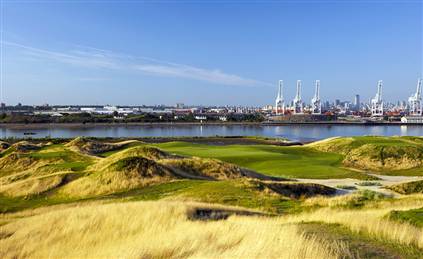
From the Associated Press
BAYONNE, N.J. - Bill the caddie stayed positive as our foursome hooked and sliced around the challenging links of Bayonne Golf Club.
“You have to play here three or four times to get a feel of where to hit the ball,” he counseled, as if we were contemplating membership at this high-end private course with awesome views of Manhattan.
Not a chance. Initiation fees of $175,000 for locals and $75,000 for national or international members, plus $10,000 annual dues, are far beyond the means of journalists on an outing.
Two months after opening, Bayonne’s hilly layout on a peninsula jutting into the Hudson River is all the buzz among New York’s well-heeled golfers, along with the new Liberty National club a couple of miles upriver.
For more, click here.
Thursday, August 10, 2006

Two very different takes on Michelle Wie firing her veteran caddie: E.M. Swing at SI.com and a more pro-Wie columun from Ferd Lewis in her hometown Honolulu paper.
First, Swift of SI..
Greg Johnston, who was Michelle Wie's caddie of less than a year before being fired Monday, a day after she finished tied for 26th at the British Women's Open, was reportedly "shocked and surprised" when he got the bad news from Wie's agent, Ross Berlin, of the William Morris Agency.
I wasn't. And Johnston shouldn't have been. Nor should he have been surprised about not getting the courtesy of a phone call from Wie or her family telling him he was unemployed. It's a pattern we've seen before.
For more, click here.
And then Lewis in the Honolulu Advertiser...
If Greg Johnston was truly "shocked and surprised" about his firing as Michelle Wie's caddie, as he has maintained to golfdigest.com, he is definitely in the minority.
If he indeed missed the signs, no wonder she had been reading putts on her own for a while.
Anybody who has followed Wie's first year as a pro and the interplay between Team Wie and its caddies should have seen it coming. Maybe not the day after the apparently fateful British Open, but surely somewhere on the horizon.
From more, click here.
Wednesday, August 09, 2006
Oops, Mr. Cohan

In my story in Tuesday's paper on the six guys who made it through the local qualifier into the U.S. Amateur at Hazeltine National in a couple of weeks, I inadvertantly left out the name of Adam Cohan, from Wayne, who shot two stellar rounds of 68-68 on a hot, sticky day at Stonewall Golf Club for a 4-under total.
To make amends, here is a link to Cohan's stats and stuff on the Georgia Tech golf team website.
Sorry, Adam Cohan, and good luck at the Amateur.
Subscribe to:
Comments (Atom)

