July 27, 2006
By Tiger Woods
Winning my third British Open was pretty special. Coming into the tournament, I knew I was playing well, but you never know if it will carry over, especially on a strange course.I arrived the Saturday before the tournament because we had never been to Royal Liverpool before and there was no information on the course.
Stevie (Williams) caddied on the course in the early 80's but he couldn't remember a thing. We just had to get there early and formulate a strategy.The max I hit my driver during my practice rounds was three times, just because the wind was different and it was blowing quite a bit. I also wanted to take a look at the golf course. As far as strategy formulating, it probably didn't happen until Monday, and then Tuesday I tried it out and I didn't play on Wednesday.
Out of the four days that I did play - from Saturday through Tuesday - we had three different wind conditions. So I got to play the course so many different ways, and each time I kept coming back to one or two drivers, if I felt comfortable doing it. As it turned out, I only used it once, on the 16th hole Thursday.
Once the tournament stated, I didn't feel I really needed to be that aggressive out there. Just plot your way along and keep making pars. The par-5's where so reachable, I knew I could do damage on them and be in contention on the back nine Sunday. As it turned out, I was right. I played them 14-under par.Of course, I also ranked first in fairways hit in regulation and second in greens in regulation. That's not a bad combo, is it?
For some reason, I had just a wonderful inner-peace the entire week. I didn't know what was going on. It was a great feeling and I wish you could have it all the time, but it doesn't work out that way.When I was playing, I never really got that aggravated and I never got that excited. It was just a nice, level feeling the entire week.
Come Sunday afternoon when I really needed it, I was able to birdie 14, 15 and 16, but I felt at ease. I wasn't pressing all day and I felt a nice, even feeling and it worked out. Sometimes it doesn't work out. This time, it did. Pop must have been looking down on me.
Another thing that happened was before the last round, when I went to warm up at the practice range, I hit several yardage signs on the fly. I also did that last year before the final round at St. Andrews, when I hit the 100-yard marker four-straight times and went on to win. This year was similar. My distance control felt great and I was able to carry it over to the course.
After I met with the press, I went upstairs in the clubhouse with Stevie, Elin, Hank (Haney) and a few friends for a champagne toast with the R&A. The first thing I told them was, `That's the hardest you guys have ever set the pins.' They laughed and apologized for the warm temperatures and lack of wind. I told them if I hadn't been wearing spikes, I would have slipped off a couple greens. They were pretty slick.
I also sent a short text message to Annika Sorenstam that read: 11. When she recently won her 10th major on the LPGA Tour, she couldn't wait to text me. Guess I'm 1-up now.Winning was no fluke.
At the Western Open earlier this month, I worked my butt off with Hank. After I opened with a 1-over 72, we worked for 2 ½ hours until dark, even though I had an early starting time the next morning. I was sliding my head to the right during my back swing and worked hard to correct that. The next day, I shot 67 and went on to finish second. That was huge for me.
Needless to say, I feel good about my swing. I'll play in the Buick Championship next week, then get ready for the PGA Championship at Medinah. Winning another major championship does wonders for your confidence.
Thanks for all your kind emails. And, if you're interested, tickets for the Target World Challenge, Dec. 13-17 at Sherwood Country Club in Thousand Oaks, Ca, can now be purchased online at targetworldchallenge.com.Take care.
Friday, July 28, 2006


Wednesday, July 26, 2006
Weekly notes from the PGA Tour
E NOTES FROM THE PGA TOURPGA TOUR·
Tiger Woods wasn’t the only player to hole out from the fairway on apar-4 last week. In fact, an astonishing 10 eagle two’s were recordedlast week at the B.C. Open presented by Turning Stone. A remarkable fivewere made in the first round. Arjun Atwal played the par-4 ninth hole in2-3-2-4 for the week.·
Tiger Woods hit 85.7% of the fairways in winning last week’s BritishOpen. That’s the highest percentage for any winner on the PGA TOUR thisyear.·
One more on Tiger: His victory last week made him the first playerin TOUR history to go over the $60-million mark in career earnings.·
It was a different course, but John Rollins obviously likes theupstate New York area. He was second at the B.C. Open last year at En JoieGC and the winner this past week at Turning Stone.·
Larry Mize finished in a T6 last week at the B.C. Open for his firstTop-10 finish since a T2 at the 2001 Marconi Pennsylvania Classic.·
Along the same lines, Bob May recorded his first Top-10 finish sincehe was third at the 2000 Reno-Tahoe Open. May finished second last week atthe B.C. Open.·
Where are all these long hitters coming from? The Nationwide Tour. Eight of the current Top 10 in Driving Distance on the TOUR are formerNationwide Tour players.
CHAMPIONS TOUR·
Champions Tour players Tom Watson and Fred Funk both made the cut last week at the British Open. Watson finished in a T48 while Funk wasT66.·
Champions Tour player Wayne Levi returned his home area of New York and made the cut at the PGA TOUR’s B.C. Open last week. Levi finished in aT62.·
Americans have won the last three Senior British Opens. Tom Watson won twice, 2003 and 2005, while Pete Oakley won in 2004. Watson won in2003 at Turnberry, site of this week’s Senior British Open. He also wonthe 1977 British Open at Turnberry.·
This week’s Senior British Open marks the third consecutive ChampionsTour major championship on the schedule. The U.S. Senior Open (won byAllen Doyle) started things off followed by the Ford Senior Players Championship (won by Bobby Wadkins). The Champions Tour was off last week.
NATIONWIDE TOUR·
The victory by John Rollins last week at the B.C. Open was the 190th win by a former Nationwide Tour player on the PGA TOUR. It was the 15th win this season by alums of the Nationwide Tour.·
Tiger Woods wasn’t the only player to hole out from the fairway on apar-4 last week. In fact, an astonishing 10 eagle two’s were recordedlast week at the B.C. Open presented by Turning Stone. A remarkable fivewere made in the first round. Arjun Atwal played the par-4 ninth hole in2-3-2-4 for the week.·
Tiger Woods hit 85.7% of the fairways in winning last week’s BritishOpen. That’s the highest percentage for any winner on the PGA TOUR thisyear.·
One more on Tiger: His victory last week made him the first playerin TOUR history to go over the $60-million mark in career earnings.·
It was a different course, but John Rollins obviously likes theupstate New York area. He was second at the B.C. Open last year at En JoieGC and the winner this past week at Turning Stone.·
Larry Mize finished in a T6 last week at the B.C. Open for his firstTop-10 finish since a T2 at the 2001 Marconi Pennsylvania Classic.·
Along the same lines, Bob May recorded his first Top-10 finish sincehe was third at the 2000 Reno-Tahoe Open. May finished second last week atthe B.C. Open.·
Where are all these long hitters coming from? The Nationwide Tour. Eight of the current Top 10 in Driving Distance on the TOUR are formerNationwide Tour players.
CHAMPIONS TOUR·
Champions Tour players Tom Watson and Fred Funk both made the cut last week at the British Open. Watson finished in a T48 while Funk wasT66.·
Champions Tour player Wayne Levi returned his home area of New York and made the cut at the PGA TOUR’s B.C. Open last week. Levi finished in aT62.·
Americans have won the last three Senior British Opens. Tom Watson won twice, 2003 and 2005, while Pete Oakley won in 2004. Watson won in2003 at Turnberry, site of this week’s Senior British Open. He also wonthe 1977 British Open at Turnberry.·
This week’s Senior British Open marks the third consecutive ChampionsTour major championship on the schedule. The U.S. Senior Open (won byAllen Doyle) started things off followed by the Ford Senior Players Championship (won by Bobby Wadkins). The Champions Tour was off last week.
NATIONWIDE TOUR·
The victory by John Rollins last week at the B.C. Open was the 190th win by a former Nationwide Tour player on the PGA TOUR. It was the 15th win this season by alums of the Nationwide Tour.·
Lendl extras and out-takes
Here are a few quotes from Ivan Lendl that didn't make it into today's story in the Inquirer:
On his constant need to compete, even with himself, such as during his daily bike ride when he feels compelled to improve his time. Does he ever stop and smell the roses?
"No, no. I smell them on the way back."
On whether he knows enough to give his daughters, Marika and Isabelle technical advice about their swings.
"No. I am not looking at their swings. I do not understand swings enough. They know more about their swings than I do. I look at where their misses go, so I can give reports to their coaches.
"Sometimes, when I go over a round, I say, okay, she missed six greens to the left. If I tell their coach, he knows what the problem is. When she calls him in the evening, he already knows what to tell them."
On why neither Marika or Isabelle mentioned Nancy Lopez or Annika Sorenstam as idols.
"They wouldn't know about Nancy Lopez (too long ago). I am surprised they didn't mention Annika."
And how come no mention of Michelle Wie, other than Isabelle's dismissive comment, "She hasn't won anythying."
"I will stay out of that one. I will give you a tip: Ask anybody out here, do a survey, and if Michelle Wie comes up once, I would be shocked."
Note: Wie's name is mud around the American Junior Golf Association because she essentially blew off junior golf to try to luck at the next level.
On whether he wishes he'd found golfer earlier in his life?
"I wish I had it over; I would play golf. Gary Player put it best. He has an outing every year and one year, he had a bunch of celebrated retired athletes. He says to every one of us, 'How old were you when you retired? 34. 36. 31.' He said, 'I am 62 years old and if somebody told me I had to quit golf, I would cry.'"
On his constant need to compete, even with himself, such as during his daily bike ride when he feels compelled to improve his time. Does he ever stop and smell the roses?
"No, no. I smell them on the way back."
On whether he knows enough to give his daughters, Marika and Isabelle technical advice about their swings.
"No. I am not looking at their swings. I do not understand swings enough. They know more about their swings than I do. I look at where their misses go, so I can give reports to their coaches.
"Sometimes, when I go over a round, I say, okay, she missed six greens to the left. If I tell their coach, he knows what the problem is. When she calls him in the evening, he already knows what to tell them."
On why neither Marika or Isabelle mentioned Nancy Lopez or Annika Sorenstam as idols.
"They wouldn't know about Nancy Lopez (too long ago). I am surprised they didn't mention Annika."
And how come no mention of Michelle Wie, other than Isabelle's dismissive comment, "She hasn't won anythying."
"I will stay out of that one. I will give you a tip: Ask anybody out here, do a survey, and if Michelle Wie comes up once, I would be shocked."
Note: Wie's name is mud around the American Junior Golf Association because she essentially blew off junior golf to try to luck at the next level.
On whether he wishes he'd found golfer earlier in his life?
"I wish I had it over; I would play golf. Gary Player put it best. He has an outing every year and one year, he had a bunch of celebrated retired athletes. He says to every one of us, 'How old were you when you retired? 34. 36. 31.' He said, 'I am 62 years old and if somebody told me I had to quit golf, I would cry.'"
Tuesday, July 25, 2006
More Bivens controversy
More trouble between the new LPGA commissioner and the tournament owners. Check out this latest story from Jay Coffin in Golf Week
Rift between Bivens, TOA widens
By JAY A. COFFIN
Another week, another Carolyn Bivens controversy.
This time, the LPGA commissioner bailed on a July 20 Tournament Owners Association meeting at the last moment, saying she was uncomfortable with the situation. Bivens made her decision moments before she was to board an airplane heading for Denver, and she told several other LPGA staff members they were not permitted to attend. One senior staffer was at the Denver airport when Bivens made the decision, and the staff member immediately returned to the tour's Daytona Beach, Fla., headquarters.
For the full story, click here.
Rift between Bivens, TOA widens
By JAY A. COFFIN
Another week, another Carolyn Bivens controversy.
This time, the LPGA commissioner bailed on a July 20 Tournament Owners Association meeting at the last moment, saying she was uncomfortable with the situation. Bivens made her decision moments before she was to board an airplane heading for Denver, and she told several other LPGA staff members they were not permitted to attend. One senior staffer was at the Denver airport when Bivens made the decision, and the staff member immediately returned to the tour's Daytona Beach, Fla., headquarters.
For the full story, click here.
Monday, July 24, 2006
Five things I learned watching the British Open

1. Tiger Woods will definitely break Jack Nicklaus' record of 18 majors. In the past year, I had my doubts. No longer. He's as good as ever, and more determined.
2. Parched as it was, Hoylake was a perfectly suitable venue, not the over-matched has-been course many of the critics made it out to be.
3. Chris DiMarco has more grit, guts and fight in his pinky finger than most of his tour pro rivals could ever dream of having.
4. Jim Furyk ain't far behind him.
5. I'd never really noticed before what a vacuous, annoying twit Bobby Clampett is.
Tiger's post-victory press conference
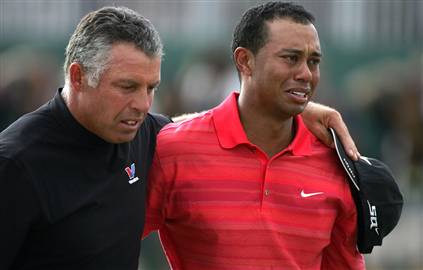
Q: Tiger, you've defended your championship very successfully. How do you feel at this stage? How do you feel now?
TIGER WOODS: Wow, I don't know where to begin. I just excited, worn out, just so many different emotions to describe right now because I guess it all came out on 18.
But overall it was such a if you're looking at it just from a golf standpoint, it was such a difficult week, with the fairways and greens being as hard and fast, and Chris playing just beautiful golf today. He just kept putting the pressure on me in the group behind. I just had to continue to try to be patient, make birdies whenever I could, but just whatever I do, just don't drop a shot and give him any momentum.
And it didn't quite work out that way. I bogeyed 14 and I believe I bogeyed 12 and he birdied 13. So two shot swing right there. I guess it just then I got hot there at 14, 15, 16, which was nice to give myself a little bit of a cushion playing 17 and 18, because obviously anything can happen on 18. I was able to play it basically stress free.
Q. Can you talk about the emotion on 18, with Stevie there? Did that surprise you that you let it out, let loose like that?
TIGER WOODS: Yeah, I've never done that. You know me. So it's just I guess all the things that we've gone through of late and I guess I'm kind of the one who bottles things up a little bit and moves on, tries to deal with things in my own way.
But at that moment it just came pouring out and of all the things that my father has meant to me and the game of golf, and I just wish he could have seen it one more time. I was pretty bummed out after not winning The Masters, because I knew that was the last major he was ever going to see. So that one was that one hurt a little bit. And finally to get this one, and it's just unfortunate that he wasn't here to see it.
Q. Do you think the U.S. Open was an unfair test, and after that because you had not played for so long, did you think, I have to prove something to anybody or even to yourself?
TIGER WOODS: Well, the U.S. Open was not an unfair test. That is the hardest Open venue we play. It's just hard.
Q. I didn't mean that so much as the fact that you had no time to really get ready for it.
TIGER WOODS: No, I had plenty of time, nine weeks. I had plenty of time to get ready for it; I just did not execute and I did not play well and subsequently I was only there for two days.
But this week coming into this week I played well at the Western, and I almost won the Western. And I knew that my game was pretty close to where I needed to have it for a major championship, and to come in here this week, my practice rounds, everything was really, I guess, getting better each and every day. And I developed a strategy to play this golf course that I thought suited me and I felt comfortable with it, and I went out there and executed my game plan.
It's just one of those things where you develop a game plan and stick with it and there's times when you need to adjust, but I stuck with it the entire week. I adjusted clubs off the tees, just because the wind conditions kept changing, but as far as the overall game plan, I never deviated.
Q. Chris talked about what he called your uncanny knack of turning it up, doing what you needed to do when somebody is chasing you. One, could you talk about that, and also could you talk about Chris's knack of giving you the best fight all the time?
TIGER WOODS: Yeah, as far as what Chris said, I don't intend to do it on purpose; that's not one of those things where I can turn on the switch. I believe in the way I play golf that you turn the switch on the first hole and you have it on the entire time. And you don't try any harder on each and every shot. You have the same effort level, you give it everything you have on every shot.
And for some reason in my past I've seemed to pull things off at the end and I think that's just due to I feel comfortable being there. I've been there enough times. I've had enough success that I feel comfortable being in that situation, and I kept telling myself today that basically only Ernie and I had won this Championship. We're the only ones who have basically won majors on that board. Sergio hasn't done it yet and I'm sure he will soon. Chris hasn't done it and he's come so close the last couple of years.
And I just think that there's certain calmness that comes about being able to say with honesty that I've done this before. And I'm out there and that's the calmness that I feel coming down the stretch.
Q. In light of your emotions at the moment and what you've said regarding your late father, will your celebrations differ in any way or is there anything special you might do given the situation and the circumstances?
TIGER WOODS: This jug will be filled up, I'll tell you that (laughter).
Q. With what?
TIGER WOODS: Beverage of my choice (laughter), and not just once.
Q. May I ask what the beverage of your choice is?
TIGER WOODS: No (laughter). Yes, you can; you just asked. Will I answer? No.
Q. Can you talk about the genesis of your strategy to not hit driver this week? You had said that you didn't know much about this course. Did you read about it on the flight over?
TIGER WOODS: Nope.
Q. It was just when you first got here. Was there a moment when it happened?
TIGER WOODS: No. As I was playing the golf course, I would hit a couple of drives, and the driver would go 350, 370 yards. How can you control that out here? You can't control that. The fairways become they're hard enough to hit as it is, and you add driver and they go that far, now how hard is it to hit? So I just felt in the end if you stayed out of the bunkers this entire week and had just a decent week on the greens, I felt that I would be in contention on the back nine.
And I hit the ball well the entire week and I felt like I had wonderful touch on the greens, except for the last nine holes yesterday. Other than that, I felt that my strategy was sound. It was going to keep me out of trouble.
Guys who were trying to hit the ball over the bunkers, they're going to have shorter clubs on the greens, no doubt about that, but a lot of these flags you can't attack with wedges. On 4, I had I'm aiming 30 feet left of the hole, and I couldn't keep it on the greens. That's the nature of the golf course and the way it was playing this week.
I felt the conservative approach was the way to go. And it lent itself to that this week, especially with four par 5s. And you figure if you just handle the par 5s, that's 16 under par right there. You sprinkle in a few more here and there around the golf course and you're looking pretty good.
Q. Has Hoylake stood the test of time and should The Open come back here, and if so, why?
TIGER WOODS: I think it's a fantastic test. With the golf course being this fast, it lent itself to just amazing creativity. Granted, if you would have had easier pins I'm sure it would have gone lower. These are the most difficult pins I've ever seen at an Open Championship. And a couple of times you feel like if you hit a putt too hard you'll actually putt it right off the green, and you never have that feeling at an Open. But this week it certainly was the case.
And I think because the yardage played short, in some cases, because it was so fast, you hit 3 wood, driver, hitting it 380 yards down there, you're going to have a lot of short irons in there. The only defense they had was pin locations and hard, dry conditions. And we couldn't really go all that low.
Q. Should it come back here?
TIGER WOODS: Yes.
Q. It didn't even look like you missed shot in your round. By your count how many did you miss and is this the best week you've had?
TIGER WOODS: I didn't mis hit any shots today. I may have started a ball left a couple of times or hit a couple to the right, but they were hit flush, and that's a pretty neat feeling when you're able to do that, to never really mis hit a golf shot, to hit it flush. I started off on line, but at least it's hit correctly and you can always make adjustments for that, and that's easy.
Q. Best long irons?
TIGER WOODS: Yeah, I have to say because I've never played a golf course like this, either, where you've had to hit so many. I hit quite a few off the tee, obviously, but I don't think I've ever hit this many into the greens, 3 and 4 irons and 5 irons on par 4s. But the golf course allowed itself to run the ball up on basically every hole. You had an opportunity to run the ball on the ground, run the ball into the green. So I just took advantage of that.
Q. Given what you learned from your dad about how to think about golf, the mental approach, what would you think about how you went through this tournament?
TIGER WOODS: He would have been very proud, very proud. He was always on my case about thinking my way around the golf course and not letting emotions get the better of you, because it's so very easy to do in this sport. And just use your mind to plot your way around the golf course and if you had to deviate from the game plan make sure it is the right decision to do that. He was very adamant I play like that my entire playing career.
Q. You're used to cameras following you and clicking off, as well. It seemed like there were a lot of distractions today, perhaps every hole. How did you deal with that, especially on the 12th fairway?
TIGER WOODS: It wasn't the 12th fairway, we had it every hole. We've never seen anything like this before. It wasn't the professional photographers, it was the gallery. They would either bring cameras or camera phones. They kept going off while we were over the shot or preparing to hit the shot or even hitting the golf shot, they were going off. And it was very, very frustrating for Sergio and I because because of all the undue delays that we've had with our caddies and the marshals and trying to get a situation where we can play, we got put on the clock. And it wasn't our fault. But that's just the way it was.
Friday, July 21, 2006
British Open notes
If you like notes and details, here are the first round notes from the PGA Tour staff:
The 67 sub-par first rounds were the most for an opening round at the Open Championship
since TOUR records in relation to par began being kept in 1956. The previous high was 59 in
1995 at St. Andrews. The first-round highs among the other major championships are 57 in the
1993 and 1995 PGA Championships (stroke-play began in 1958), 39 at the 1990 U.S. Open and 35 at the 1992 Masters. The last time the Open Championship was held at Royal Liverpool GC, there were 19 sub-par rounds. Northern Ireland’s Graeme McDowell, a member of the PGA TOUR, holds the first-round lead alone at the 2006 Open Championship, one stroke ahead of Greg Owen, Anthony Wall, Miguel
Angel Jiminez, Keiichiro Fukabori and Tiger Woods. The two-time winner on the European Tour fired a 6-under 66 set a course record (course has been modified since last Open Championship in 1967) and post his career-best round in a major and just his third round in the 60s in 21 major championship rounds. Previous best was a 5-under 67 during round four of the 2005 Open Championship (T11).
England’s Greg Owen, a member of the PGA TOUR, produced a 5-under 67 on Thursday. It was his best round in a major championship in 23 rounds. Owen is making his sixth start in an Open Championship and has made two prior cuts with a career-best finish of T23 in 2001. Earlier this season, Owen finished one stroke behind Rod Pampling at the Bay Hill Invitational for his best TOUR finish.
England’s Anthony Wall, playing in his second career major, sits in a tie for second after
his 5-under 67. Wall finished T46 at Royal St. George’s in 2003, his only other start on the
PGA TOUR.
The 5-under 67 by Miguel Angel Jimenez on Thursday is his best opening round in a major
since he posted a 5-under 66 during round one of the 2000 U.S. Open at Pebble Beach Golf
Links. It’s his best round at the Open Championship since a 67 during round three in 2001 at
Royal Lytham.
Tiger Woods posted an opening-round 5-under 67 on Thursday. It was the seventh time in his last nine starts at the Open Championship that Woods has opened with a sub-par round. He’s also recorded 10 of his last 11 rounds in the Open at par or better. It’s just the second
time he has opened a major with a round in the 60s since the 2002 Open Championship (17
starts), the other was a 6-under 66 during his win in 2005 at St. Andrews.
This is the fourth time in 12 starts at the Open Championship that Tiger Woods has opened with a round in the 60s. He has finished no worse than third when doing so with two wins in 2000 (67) and 2005 (66) and a third (65) in 1998.
Sergio Garcia finished with a 4-under 68. It was his best round in a major championship
since a 2-under 68 during the second round of the 2004 U.S. Open. It’s also the first time
Garcia has opened a major with a round in the 60s since a 69 in the 2003 U.S. Open (13
starts).
Australia’s Marcus Fraser, playing in just his second career major, fired a major
career-best 4-under 68 to sit in a tie for seventh. He missed the cut at St. Andrews in
2005.
South Korea’s S.K. Ho fired his first major round in the 60s in 17 rounds with his 4-under
68 on Thursday. Ho’s previous low in a major was 70 during the first round of the 2003 Open
at Royal St. George’s.
Australia’s Mark Hensby, playing in his second Open Championship, opened with a round in the 60s (4-under 68) for the second straight year. Last year, his 5-under 67 helped him to a T15 finish.
Canada’s Mike Weir posted a 4-under 68, his best round in a major since a 68 during the
third round of the 2005 Masters. Since his win at the 2003 Masters, Weir has posted just
seven of 46 rounds in a major in the 60s. It was Weir’s first major opening-round in the 60s
since a 69 at the 2004 U.S. Open Championship where he finished T4. Weir is looking to post back-to-back top-10s in a major (T6-2006 U.S. Open) for the first time since a T4 at the
2004 U.S. Open and a T9 at the Open Championship.
Ernie Els began an Open Championship with a round of par or better for the 11th time in 16 starts and is looking to make his 15th consecutive cut in the tournament. His 4-under 68 was
his best opening-round at the Open Championship since a 6-under 66 in 2000 at St. Andrews GC when he finished T2. It’s just his third round in the 60s over his last 25 rounds in the majors dating back to 2004 PGA Championship.
Jim Furyk’s 4-under 68 was tied for the best round posted by a player from the United
States. Furyk is looking to break a streak of five consecutive missed cuts at the Open
Championship. Interestingly, he made the cut in his first five Open Championship starts,
including three top-10s. The 68 was one off Furyk’s low round in an Open, a 4-under 67
during the 1997 first round at Royal Troon.
U.S. Ryder Cup Captain Tom Lehman matched Furyk with a 4-under 68. The 1996 winner at Royal Lytham posted his best round at the Open since an opening-round 68 in 2000 at St. Andrews.
The 68 was Lehman’s best round in a major since a 68 during round two of the 2001 U.S .Open at Southern Hills CC. It’s just his second round in the 60s in his last 43 major rounds (69, rd 2, 2005 Open Championship).
Australia’s John Senden, who became the eighth first-time winner on the PGA TOUR at last
week’s John Deere Classic, fired a 2-under 70 during Thursday’s first round. This is his
second trip to the Open Championship, he missed the cut in 2002 at Muirfield GC after rounds of 76-70—146 (+4).
There are seven players from the PGA TOUR making their initial start in an Open
Championship. The group was led by Lucas Glover and Vaughn Taylor with even-par-72s on Thursday. The others -- J.J. Henry (73)., J.B. Holmes (74), Arron Oberholser (73), Brett Quigley (79), and Brett Wetterich (75).
The 67 sub-par first rounds were the most for an opening round at the Open Championship
since TOUR records in relation to par began being kept in 1956. The previous high was 59 in
1995 at St. Andrews. The first-round highs among the other major championships are 57 in the
1993 and 1995 PGA Championships (stroke-play began in 1958), 39 at the 1990 U.S. Open and 35 at the 1992 Masters. The last time the Open Championship was held at Royal Liverpool GC, there were 19 sub-par rounds. Northern Ireland’s Graeme McDowell, a member of the PGA TOUR, holds the first-round lead alone at the 2006 Open Championship, one stroke ahead of Greg Owen, Anthony Wall, Miguel
Angel Jiminez, Keiichiro Fukabori and Tiger Woods. The two-time winner on the European Tour fired a 6-under 66 set a course record (course has been modified since last Open Championship in 1967) and post his career-best round in a major and just his third round in the 60s in 21 major championship rounds. Previous best was a 5-under 67 during round four of the 2005 Open Championship (T11).
England’s Greg Owen, a member of the PGA TOUR, produced a 5-under 67 on Thursday. It was his best round in a major championship in 23 rounds. Owen is making his sixth start in an Open Championship and has made two prior cuts with a career-best finish of T23 in 2001. Earlier this season, Owen finished one stroke behind Rod Pampling at the Bay Hill Invitational for his best TOUR finish.
England’s Anthony Wall, playing in his second career major, sits in a tie for second after
his 5-under 67. Wall finished T46 at Royal St. George’s in 2003, his only other start on the
PGA TOUR.
The 5-under 67 by Miguel Angel Jimenez on Thursday is his best opening round in a major
since he posted a 5-under 66 during round one of the 2000 U.S. Open at Pebble Beach Golf
Links. It’s his best round at the Open Championship since a 67 during round three in 2001 at
Royal Lytham.
Tiger Woods posted an opening-round 5-under 67 on Thursday. It was the seventh time in his last nine starts at the Open Championship that Woods has opened with a sub-par round. He’s also recorded 10 of his last 11 rounds in the Open at par or better. It’s just the second
time he has opened a major with a round in the 60s since the 2002 Open Championship (17
starts), the other was a 6-under 66 during his win in 2005 at St. Andrews.
This is the fourth time in 12 starts at the Open Championship that Tiger Woods has opened with a round in the 60s. He has finished no worse than third when doing so with two wins in 2000 (67) and 2005 (66) and a third (65) in 1998.
Sergio Garcia finished with a 4-under 68. It was his best round in a major championship
since a 2-under 68 during the second round of the 2004 U.S. Open. It’s also the first time
Garcia has opened a major with a round in the 60s since a 69 in the 2003 U.S. Open (13
starts).
Australia’s Marcus Fraser, playing in just his second career major, fired a major
career-best 4-under 68 to sit in a tie for seventh. He missed the cut at St. Andrews in
2005.
South Korea’s S.K. Ho fired his first major round in the 60s in 17 rounds with his 4-under
68 on Thursday. Ho’s previous low in a major was 70 during the first round of the 2003 Open
at Royal St. George’s.
Australia’s Mark Hensby, playing in his second Open Championship, opened with a round in the 60s (4-under 68) for the second straight year. Last year, his 5-under 67 helped him to a T15 finish.
Canada’s Mike Weir posted a 4-under 68, his best round in a major since a 68 during the
third round of the 2005 Masters. Since his win at the 2003 Masters, Weir has posted just
seven of 46 rounds in a major in the 60s. It was Weir’s first major opening-round in the 60s
since a 69 at the 2004 U.S. Open Championship where he finished T4. Weir is looking to post back-to-back top-10s in a major (T6-2006 U.S. Open) for the first time since a T4 at the
2004 U.S. Open and a T9 at the Open Championship.
Ernie Els began an Open Championship with a round of par or better for the 11th time in 16 starts and is looking to make his 15th consecutive cut in the tournament. His 4-under 68 was
his best opening-round at the Open Championship since a 6-under 66 in 2000 at St. Andrews GC when he finished T2. It’s just his third round in the 60s over his last 25 rounds in the majors dating back to 2004 PGA Championship.
Jim Furyk’s 4-under 68 was tied for the best round posted by a player from the United
States. Furyk is looking to break a streak of five consecutive missed cuts at the Open
Championship. Interestingly, he made the cut in his first five Open Championship starts,
including three top-10s. The 68 was one off Furyk’s low round in an Open, a 4-under 67
during the 1997 first round at Royal Troon.
U.S. Ryder Cup Captain Tom Lehman matched Furyk with a 4-under 68. The 1996 winner at Royal Lytham posted his best round at the Open since an opening-round 68 in 2000 at St. Andrews.
The 68 was Lehman’s best round in a major since a 68 during round two of the 2001 U.S .Open at Southern Hills CC. It’s just his second round in the 60s in his last 43 major rounds (69, rd 2, 2005 Open Championship).
Australia’s John Senden, who became the eighth first-time winner on the PGA TOUR at last
week’s John Deere Classic, fired a 2-under 70 during Thursday’s first round. This is his
second trip to the Open Championship, he missed the cut in 2002 at Muirfield GC after rounds of 76-70—146 (+4).
There are seven players from the PGA TOUR making their initial start in an Open
Championship. The group was led by Lucas Glover and Vaughn Taylor with even-par-72s on Thursday. The others -- J.J. Henry (73)., J.B. Holmes (74), Arron Oberholser (73), Brett Quigley (79), and Brett Wetterich (75).
Thursday, July 20, 2006
Lopez on Wie
 Let there be no question about where Nancy Lopez, the Tiger Woods turned grande dame of the LPGA, stands when it comes to Michelle Wie - - she should forget about the PGA Tour.
Check out these excerpts from Lopez's recent pre-tourney intervew at the Jamie Farr:
Q. Being a child prodigy yourself, to some degree, what do you think of Michelle Wie and the approach she is taken to being professional at the age of 16?
NANCY LOPEZ: I'm really always saying I'm kind of confused, I'm not really sure what she wants to do. I haven't really talked to her about it.I know if I had a 16 year old that could play golf the way that she did, or she does, I think I would have advised my 16 year old to play more amateur golf. I would have never encouraged her to play on the men's tour.
I think that, you know, we have a woman's tour, and I think the men, I would probably say that most of the players on the PGA TOUR probably don't want her to play on their TOUR. They probably don't say that, but I'm speaking for them and my opinion. You know, I respect the PGA TOUR. They have their tour. I don't want any of their guys to play on our Tour. If we did not have a rule, I wouldn't want them to be over here. If they did we would have no women Tour because we would have a bunch of men on our Tour beating us. I'm a little confused there because I know when I was a little girl I wanted to win. I just don't think Michelle can win on the men's tour.
I would think that her goal would be to win on the woman's tour and be the best she can be on the woman's tour. Because she is such a great talent and she is really a nice girl. To be the best right now, she is going to be playing against some of the best players that's ever played on the LPGA Tour. I think we have the best product we've ever had with all of the young players that are out here and they will be here for many, many years. Most of them are around 20.
So I would think that she would set her goals to be the best, and to beat Annika, and to win more tournaments than Kathy Whitworth. She can do that. But everyone says, ‘Well, she has finished second in that event.' There is a big difference second and first. There really is because I've been there. To win you know when you are walking down the 18th fairway, and you're either one shot behind, or tied, or one shot in the lead, that is pressure.
So, you know what it's all about if you've been there. She hasn't won for a long time. I mean it's been a while. I think it's going to be harder – I think if she would have played more amateur golf she would have already won out here. I truly believe that. Because she would have come out here with the attitude internally that she was the best and that she could win. I don't really know if she can answer that question to herself now that she can really win right now. I think she will eventually win for sure on the LPGA Tour, but I really think she would have won already by now.
Q. Do you think it would benefit the LPGA to get her out to a few more things? I know there are a myriad of rules because she is not a full time member, giving the attention that she draws.
NANCY LOPEZ: Definitely. I want the LPGA Tour to succeed. The PGA TOUR is already doing that. We need her on the LPGA Tour to bring those people in the gates to watch her play. That's why we are going to make more money for charity first, and then for the LPGA Tour for the purses to get bigger. I hope that she cares enough about the LPGA Tour to come out here and play with us and bring those fans out here to watch Michelle Wie on the LPGA Tour.
Shove it

Phil Mickelson is now offiically sick and tired of questions about his monumental meltdown at the U.S. Open.
After his first round 69 at the British Open this morning, Mickelson sat down for a quick chat with Jim Huber from TNT. Soon enough, of course, the conversation turned to you-know-what and whether it might haunt him this week as his chased his first Claret Jug. Mickelson, who is as savvy as it comes in media relations, forced a smile and said something like, "Well, I'm not going to let one hole affect how to do in majors."
But what was obvious and undeniable as Mickelson spoke through gritted teeth was that he wanted to lunge across the chair, yank that microphone out of Huber's hand, and shove it down his ever-loving throat.
British Open digs
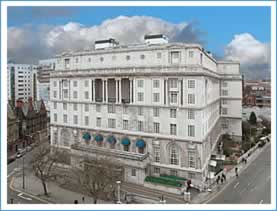
Here in the good old US of A, when we travel, we tend to take accommodations for granted. Not so in Europe.
I once had a hotel room at the Ryder Cup that had a shower but only half a shower door.
Check out this "Postcard" from this week's British Open from Barker "The Rover" Davis of the Washington Times:
In the well-established tradition of bizarre British Open lodgings, the Rover is delighted to report that his accommodations in Liverpool this week are the most shocking he's ever encountered in nine trips to the Open.
The Rover is booked into a massive hotel in center city Liverpool (a stunningly dirty port town that should be renamed Cesspool) called the Adelphi. The once-grand Adelphi is one of the largest and oldest hotels in the city. And it's quite clear the owners haven't spent a shilling on upkeep since Bill Shakespeare stayed there. It's simply an impossibly shabby old dame. The Rover's room is large enough for a basketball court, complete with 12-foot ceilings, intricate molding and gaudy candelabra lighting. But every stick of furniture in the room, all of it gloriously unmatched, is marred by a combination of cigarette burns and stains of dubious origin. The "king-sized bed" is two sagging twins shoved together. Better yet, both are fitted with single sheets, completely dispelling the illusion.
Not only are grime, cobwebs and dust omnipresent, the Rover arrived to find the following objects under a high side table: two cigarette butts, an empty pint glass and two soiled cocktail napkins. And after two visits from the maid, they're still there. Suffice it to say, it's the kind of room where one never removes his shoes, much less his socks. Should the Rover fail to correspond later this week, it will undoubtedly be because Jack Nicholson has burst out of a closet and induced a coronary.
Wednesday, July 19, 2006
Arnold grabs early lead in the Philly Open
 This just in from the Golf Assn of Phila...
Steve Arnold, an amateur from Yardley CC, holds the first-round lead after posting a 3-under-par 68 at Llanerch CC in the Open Championship.
For live scoring, click here.
Top golfing docs
 Who's the best golfer among doctors in the area?
That would be Dr. W. Clark Hargrove, a heart surgeon at Presbyterian Medical Center in Philadelphia, and a 1.3 handicapper at Merion and Pine Valley.
I wasn't surprised to stumble across that fact in the August issue of Golf Digest, because, as it happens, Clark and I grew up in the same small town in North Carolina, Tarboro. I can remember Clark winning the club championship at our little 9-hole club, Hilma Country Club, when he was only 13 or 14. He's still got game, ranking tied for 19th in the magazine's national list.
For Golf Digest's complete list of Top Docs, including a few more from the area, click here.
Tiger's pre-British Open interview
Excerpts from Tiger Woods' pre-tournament interview at the British Open.
Q: Tiger, coming here to a links course, which is in true links condition, you've been here
for a few days now, how do you find the course playing?
TIGER WOODS: It's not playing slow. The golf course is definitely fast. It's hard. It's a
little bit slower the last couple of days because obviously they're putting some water on
it, trying to keep it alive. But overall it's going to be a fantastic challenge this week to play a golf course this fast. We don't get a chance to do this very often, but when we do, it sure brings back shot making and creativity back in the game.
Q. The last time you had the 2 iron in the bag before this week, and kind of talk about
that.
TIGER WOODS: The last time I played with it was probably it was Dunlop Phoenix last year.
Yeah, that's the last time I actually have used it in competition.
Q. Can you talk about that?
TIGER WOODS: The 5 wood just definitely is not rolling, obviously. That's the reason why
it's in the bag, on most golf courses. But this week, I like the feeling, I'm trying to take
advantage of the fast fairways and roll the ball out there. And the 2 iron enables me to do
that.
Q. You obviously missed the cut at the U.S. Open. Now you've had a month to prepare and you seem to be very much ready for The Open. How do you get ready for this? Is it mental?
TIGER WOODS: I think it's just getting back into the playing again. I took a lot of time off
prior to the U.S. Open and I wasn't hitting the ball as well as I wanted to in competition.
But I fixed those mistakes prior to the Western and I got back into the competitive flow
again. And I got things going and it's nice when you play four rounds. I had two extra days
there at the Western to get back into the flow of things and the weekend I played great. So
I feel like I'm back into playing again after taking such a long time off prior to the U.S.
Open.
Q. I was going to ask about your father. Those of us who saw you in THE PLAYERS and then The Masters and the U.S. Open have seen you in different and obviously very understandable circumstances, and those of us who have lost parents understand. When do you think you can say I'm clear of it, I've come out of it, I've learned how to deal with it, and do you still think of your father every day?
TIGER WOODS: Well, there's not a day that I don't think I'll ever go through life without
thinking about my dad. I love him dearly. And everyone I've ever talked to that has lost a
parent, they think about them every day and they always miss them, and especially if the
bond that we've had, you know, I think it transcended just a normal parent/child
relationship. And I think that's probably why I will think about him more, and especially
when I'm out here playing and practicing, because a lot of the fundamentals actually all the
fundamentals that I learned were from him.
Anytime I go back to my basics and work on grip, posture and stance and aim and all those
things that I learned from him, I always think about those younger days. I honestly don't
think there will ever be a day that I won't think about him.
Q. But there will be a day when you say to yourself, yes, I've come to terms with it, I've
worked it out. Have you arrived at that day or when do you think it will come?
TIGER WOODS: I've come to terms with it, there's no doubt about that. He's not here anymore. It's not like I can pick up the phone and call him and say, "Pop, what do you think about my putting stroke?" Those days aren't here anymore. So I've got to come to terms with it and understand it, it's just not there. I have so many wonderful memories that I'll look back on
it with smiles every time.
Q. Given how unusual it was for you to miss a cut in the U.S. Open, what were the practice
sessions like the next couple of years? How significant was it to sort of feel that Sunday
pressure and get in the chase again at the Western?
TIGER WOODS: Well, it was nice to get back out and practice after The Open and work on the things that I did not do well at The Open. And I felt like I rectified that at the Western.
And after the first day I didn't really I didn't putt all that well and got it going on the
weekend with the putter, but I also hit the ball better. It was nice to be back in the mix
with a chance on the back nine, even though I didn't pull it off, but I had a chance. And I
would say it's been a while, but it's only been two tournaments. I had a chance at Augusta
and my next tournament was the U.S. Open. Tournament wise it was only two tournaments, but time wise, it was a little longer.
Q. I'm curious, with regard if there's anything fun you've done with the Claret Jug, having
it, and if so, what did you do when you had it, showing it around, bringing it to places?
TIGER WOODS: Just filled it up with beverages of my choice (laughter).
Q. At home, or did you bring it around at all?
TIGER WOODS: What, would I bring it out to I wouldn't do that, no.
Q. You've been drawn with Nick Faldo the first few days. What's your current relationship
with him after the way he criticized your swing a year or two back?
TIGER WOODS: We really don't talk much.
Q. You don't talk much? Will you be talking on Thursday and Friday?
TIGER WOODS: I've only played with him two times since I've been a pro. And there wasn't a lot of talking there, either.
Q. So does that mean you'll shake hands on the first tee and on the 18th green, and that
will be it?
TIGER WOODS: I don't know. I really don't know. It's up to him and I'll be in my world
trying to compete and trying to win the Championship, and I'm sure he'll probably do the
same thing.
Q. If he wants to talk, what will be your reaction?
TIGER WOODS: Surprised (laughter).
Q. If we could talk about the golf course for a second. It's not often you have a course
with bunkers like this. Is it as much of an issue as some of us are making it to be?
TIGER WOODS: It depends on what you're trying to do with your tee shots. I don't know what most of the guys are doing on 3, but you have that option of driving it over, if you want
to. On 18 they can come up on you a little quick, if the wind is down off the left. But
other than that it really doesn't come into play.
Q. Two thoughts, how often do you use the driver here, because it is so fast? Are you using
a 2 iron off the tee more than the driver?
TIGER WOODS: Yes.
Q. Tiger, before the U.S. Open you said that you felt ready to compete. After missing the
cut there, do you did you rationalize missing the cut as basically the fact that you just
hadn't played competitively since The Masters?
TIGER WOODS: I was ready to compete, there was no doubt about that, I was ready to compete and I was ready to play and I just didn't play well. I just didn't get into the competitive
flow fast enough. By the time I did get into the flow of the round, I was always behind the
8 ball, and you can't wait that long to get into the flow of a round.
Taking that much time off and then coming back to well, as it is, the hardest U.S. Open
venue we've ever played, it made it really difficult. Subsequently I didn't execute. I
didn't execute fast enough. As I said, I got into the flow too late. If I had gotten down to
a flow a little earlier, things might have been different.
Q. Going back to what you said about how you would want to ring your father and say "Pop,
what do you think about my putting stroke," who do you ring up now? Do you talk to Mark
O'Meara or your mum?
TIGER WOODS: I always talk to my mom, I talk to her all the time.
Q. Does she give technical
TIGER WOODS: No, no, no, no (laughter). No. She usually gives words of encouragement from mom. As everyone knows, she's pretty fiery. So it's more from that side than it is from a
technical side.
Q. Who would you ring for the who could you say, "What do you think of my putting stroke," Hank or Mark?
TIGER WOODS: Hank. That's why he's my coach.
Q. Can you talk a little bit about the imagination you need to use specifically here at
Hoylake? Some of the guys were saying they couldn't keep their balls on the greens on the
par 3s on the front.
TIGER WOODS: Yeah, you know, some of them. Yeah, if you get downwind it's really hard to
keep it on the green, unless you get a chance into the wind to use the wind as a backboard.
But when it gets going downwind and the greens are this firm you have to to a front pin,
it's going to be really hard to get it close. A lot of good shots here downwind are going to
be 20, 30, 40 feet away and it's going to be a good shot.
That's one of the neat things about playing over here is that the galleries certainly
understand that. You hear the types of applause; we play around the world and a lot of times
the ball gets airborne there's always applause. Over here if you hit a good shot and they
know it and it's 30 feet away, there's a pretty good roar, because that is a good shot. The
people are very knowledgeable when we come over here and play an Open Championship.
Q. You mentioned playing the birdie holes. There's already conjecture that you might see the
first sub 63 in a major this week. And your 18 under par in St. Andrews, could you talk
about that? You mentioned the support. Do you think you've been more of a crowd favorite
because of the way you handled everything surrounding your dad's death?
TIGER WOODS: Wasn't it 19? I got to 20 and bogeyed 17. Sorry. Give me a little credit.
No, I think it's if the wind doesn't blow, you can make some birdies out here. The par 5s
are reachable and there are some short par 4s out here. You can get the ball in pretty
close. You would have to take no wind in order to have a chance of going to sub 63. But as
far as the 19 under par mark, I think it obviously can be done, but will it be done is
obviously a different story. And as we all know, it's all dependent on the weather. We
played St. Andrews in 2000 with almost no wind.
Q. Do you look at it as sympathy?
TIGER WOODS: I don't think of it as sympathy. We all have things that go on in life. I'm not
the first one, I'm certainly not the last one. It happens to everybody. Everybody goes
through moments like this. You've got to handle it and move on. It's been fantastic to have
the people, all the letters and the e mails and the phone calls we've received. I think
mainly because of the impact my father has had on the game of golf, and as a person. That to
me means so much to me.
Q: Tiger, coming here to a links course, which is in true links condition, you've been here
for a few days now, how do you find the course playing?
TIGER WOODS: It's not playing slow. The golf course is definitely fast. It's hard. It's a
little bit slower the last couple of days because obviously they're putting some water on
it, trying to keep it alive. But overall it's going to be a fantastic challenge this week to play a golf course this fast. We don't get a chance to do this very often, but when we do, it sure brings back shot making and creativity back in the game.
Q. The last time you had the 2 iron in the bag before this week, and kind of talk about
that.
TIGER WOODS: The last time I played with it was probably it was Dunlop Phoenix last year.
Yeah, that's the last time I actually have used it in competition.
Q. Can you talk about that?
TIGER WOODS: The 5 wood just definitely is not rolling, obviously. That's the reason why
it's in the bag, on most golf courses. But this week, I like the feeling, I'm trying to take
advantage of the fast fairways and roll the ball out there. And the 2 iron enables me to do
that.
Q. You obviously missed the cut at the U.S. Open. Now you've had a month to prepare and you seem to be very much ready for The Open. How do you get ready for this? Is it mental?
TIGER WOODS: I think it's just getting back into the playing again. I took a lot of time off
prior to the U.S. Open and I wasn't hitting the ball as well as I wanted to in competition.
But I fixed those mistakes prior to the Western and I got back into the competitive flow
again. And I got things going and it's nice when you play four rounds. I had two extra days
there at the Western to get back into the flow of things and the weekend I played great. So
I feel like I'm back into playing again after taking such a long time off prior to the U.S.
Open.
Q. I was going to ask about your father. Those of us who saw you in THE PLAYERS and then The Masters and the U.S. Open have seen you in different and obviously very understandable circumstances, and those of us who have lost parents understand. When do you think you can say I'm clear of it, I've come out of it, I've learned how to deal with it, and do you still think of your father every day?
TIGER WOODS: Well, there's not a day that I don't think I'll ever go through life without
thinking about my dad. I love him dearly. And everyone I've ever talked to that has lost a
parent, they think about them every day and they always miss them, and especially if the
bond that we've had, you know, I think it transcended just a normal parent/child
relationship. And I think that's probably why I will think about him more, and especially
when I'm out here playing and practicing, because a lot of the fundamentals actually all the
fundamentals that I learned were from him.
Anytime I go back to my basics and work on grip, posture and stance and aim and all those
things that I learned from him, I always think about those younger days. I honestly don't
think there will ever be a day that I won't think about him.
Q. But there will be a day when you say to yourself, yes, I've come to terms with it, I've
worked it out. Have you arrived at that day or when do you think it will come?
TIGER WOODS: I've come to terms with it, there's no doubt about that. He's not here anymore. It's not like I can pick up the phone and call him and say, "Pop, what do you think about my putting stroke?" Those days aren't here anymore. So I've got to come to terms with it and understand it, it's just not there. I have so many wonderful memories that I'll look back on
it with smiles every time.
Q. Given how unusual it was for you to miss a cut in the U.S. Open, what were the practice
sessions like the next couple of years? How significant was it to sort of feel that Sunday
pressure and get in the chase again at the Western?
TIGER WOODS: Well, it was nice to get back out and practice after The Open and work on the things that I did not do well at The Open. And I felt like I rectified that at the Western.
And after the first day I didn't really I didn't putt all that well and got it going on the
weekend with the putter, but I also hit the ball better. It was nice to be back in the mix
with a chance on the back nine, even though I didn't pull it off, but I had a chance. And I
would say it's been a while, but it's only been two tournaments. I had a chance at Augusta
and my next tournament was the U.S. Open. Tournament wise it was only two tournaments, but time wise, it was a little longer.
Q. I'm curious, with regard if there's anything fun you've done with the Claret Jug, having
it, and if so, what did you do when you had it, showing it around, bringing it to places?
TIGER WOODS: Just filled it up with beverages of my choice (laughter).
Q. At home, or did you bring it around at all?
TIGER WOODS: What, would I bring it out to I wouldn't do that, no.
Q. You've been drawn with Nick Faldo the first few days. What's your current relationship
with him after the way he criticized your swing a year or two back?
TIGER WOODS: We really don't talk much.
Q. You don't talk much? Will you be talking on Thursday and Friday?
TIGER WOODS: I've only played with him two times since I've been a pro. And there wasn't a lot of talking there, either.
Q. So does that mean you'll shake hands on the first tee and on the 18th green, and that
will be it?
TIGER WOODS: I don't know. I really don't know. It's up to him and I'll be in my world
trying to compete and trying to win the Championship, and I'm sure he'll probably do the
same thing.
Q. If he wants to talk, what will be your reaction?
TIGER WOODS: Surprised (laughter).
Q. If we could talk about the golf course for a second. It's not often you have a course
with bunkers like this. Is it as much of an issue as some of us are making it to be?
TIGER WOODS: It depends on what you're trying to do with your tee shots. I don't know what most of the guys are doing on 3, but you have that option of driving it over, if you want
to. On 18 they can come up on you a little quick, if the wind is down off the left. But
other than that it really doesn't come into play.
Q. Two thoughts, how often do you use the driver here, because it is so fast? Are you using
a 2 iron off the tee more than the driver?
TIGER WOODS: Yes.
Q. Tiger, before the U.S. Open you said that you felt ready to compete. After missing the
cut there, do you did you rationalize missing the cut as basically the fact that you just
hadn't played competitively since The Masters?
TIGER WOODS: I was ready to compete, there was no doubt about that, I was ready to compete and I was ready to play and I just didn't play well. I just didn't get into the competitive
flow fast enough. By the time I did get into the flow of the round, I was always behind the
8 ball, and you can't wait that long to get into the flow of a round.
Taking that much time off and then coming back to well, as it is, the hardest U.S. Open
venue we've ever played, it made it really difficult. Subsequently I didn't execute. I
didn't execute fast enough. As I said, I got into the flow too late. If I had gotten down to
a flow a little earlier, things might have been different.
Q. Going back to what you said about how you would want to ring your father and say "Pop,
what do you think about my putting stroke," who do you ring up now? Do you talk to Mark
O'Meara or your mum?
TIGER WOODS: I always talk to my mom, I talk to her all the time.
Q. Does she give technical
TIGER WOODS: No, no, no, no (laughter). No. She usually gives words of encouragement from mom. As everyone knows, she's pretty fiery. So it's more from that side than it is from a
technical side.
Q. Who would you ring for the who could you say, "What do you think of my putting stroke," Hank or Mark?
TIGER WOODS: Hank. That's why he's my coach.
Q. Can you talk a little bit about the imagination you need to use specifically here at
Hoylake? Some of the guys were saying they couldn't keep their balls on the greens on the
par 3s on the front.
TIGER WOODS: Yeah, you know, some of them. Yeah, if you get downwind it's really hard to
keep it on the green, unless you get a chance into the wind to use the wind as a backboard.
But when it gets going downwind and the greens are this firm you have to to a front pin,
it's going to be really hard to get it close. A lot of good shots here downwind are going to
be 20, 30, 40 feet away and it's going to be a good shot.
That's one of the neat things about playing over here is that the galleries certainly
understand that. You hear the types of applause; we play around the world and a lot of times
the ball gets airborne there's always applause. Over here if you hit a good shot and they
know it and it's 30 feet away, there's a pretty good roar, because that is a good shot. The
people are very knowledgeable when we come over here and play an Open Championship.
Q. You mentioned playing the birdie holes. There's already conjecture that you might see the
first sub 63 in a major this week. And your 18 under par in St. Andrews, could you talk
about that? You mentioned the support. Do you think you've been more of a crowd favorite
because of the way you handled everything surrounding your dad's death?
TIGER WOODS: Wasn't it 19? I got to 20 and bogeyed 17. Sorry. Give me a little credit.
No, I think it's if the wind doesn't blow, you can make some birdies out here. The par 5s
are reachable and there are some short par 4s out here. You can get the ball in pretty
close. You would have to take no wind in order to have a chance of going to sub 63. But as
far as the 19 under par mark, I think it obviously can be done, but will it be done is
obviously a different story. And as we all know, it's all dependent on the weather. We
played St. Andrews in 2000 with almost no wind.
Q. Do you look at it as sympathy?
TIGER WOODS: I don't think of it as sympathy. We all have things that go on in life. I'm not
the first one, I'm certainly not the last one. It happens to everybody. Everybody goes
through moments like this. You've got to handle it and move on. It's been fantastic to have
the people, all the letters and the e mails and the phone calls we've received. I think
mainly because of the impact my father has had on the game of golf, and as a person. That to
me means so much to me.
Tuesday, July 18, 2006
Philadelphia Open
 Time once again for one of the biggest days in local golf, the Philadelphia Open. Defending champion Graham Dendler, an assistant pro at Merion, heads the field of 45 club pros and 15 top amateurs.
Here's GAP preview:
For the first time in more than half a century, the Open Championship returns to historic Llanerch Country Club. The 102nd Open Championship takes place on Wednesday, July 19, with a field of 60 players competing in the one-day, 36-hole stroke play championship. The field will be comprised of 15 amateurs from the Golf Association of Philadelphia and 45 professionals from the Philadelphia Section of the PGA.
Back to defend his championship is Graham Dendler, 34, of Havertown, Pa., an assistant professional at Merion Golf Club. Dendler defeated a strong field by a stroke last year at a difficult Aronimink Golf Club. He looks to become the first back-to-back Open winner since Frank Dobbs of Spring Ford Country Club turned the trick in 1991-92.
For the rest of the preview, tee times and tournament history, click here.
Ho hum Hoylake
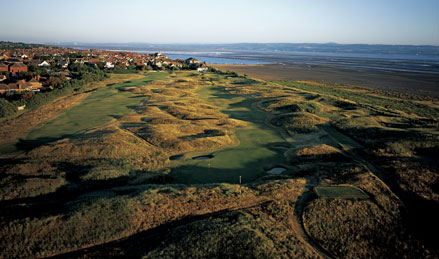
Most years, the British Open is played on a course with history and impeccable credentials. This year, as the Open returns to Hoylake for the first time on four decades, the silence is deafening. John Huggan, Golf World's man in the U.K., offers this preview.
By John Huggan
Golf World July 14, 2006
Driving past the course, aloong a blandly suburban road on the Wirral Peninsula perhaps 10 miles from the city of Liverpool, you'd never know Hoylake existed. Underwhelming, unimpressive even, the initial glimpse of the links itself is but marginally more interesting.
"On first view [the holes] are not imposing," said the first great golf writer, Bernard Darwin. And he wasn't wrong. Shadowed by distant dunes whose sole scene-stealing purpose seems to be obscuring the striking blue waters of the Dee Estuary and the rolling hills of North Wales, Royal Liverpool offers gentle changes in elevation and little more than the odd bush or two to occasionally break the monotonous vista.
Later, even a closer inspection does little to immediately recommend the place; golf's supposedly sure-fire indicator of architectural inadequacy, the various internal out-of-bounds, here marked by small grassy banks known as "cops," inevitably provokes bemused smiles and the odd furrowed brow. You can almost see the questions forming in the minds of every first-time visitor.
For the rest of the story, click here.
So long ABC
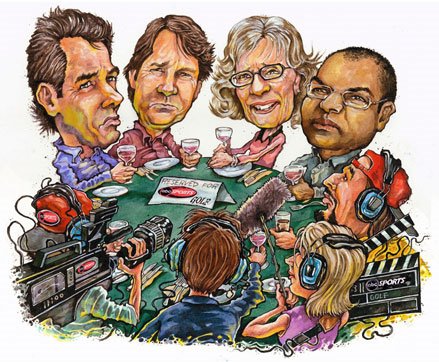
With ABC Sports bowing out of PGA Tour coverage starting next year, this week's British Open is the network's swan song. Expect the farewell to be sentimenal and sad.
For a good idea of what's going on behind the scenes, check out this story in Golf World by Dave Shedloski.
By Dave Shedloski
Golf World July 14, 2006
More than 100 of them assembled for dinner at the Marriott Rancho Las Palmas Hotel in Palm Springs on a crisp Saturday night in January, their appetites diminished as they tried to talk around the tumult injected into their cloistered realm. Overshadowing the occasion for which the ABC golf team gathered that evening--to celebrate the beginning of another season of PGA Tour telecasts--was the week-old, other-shoe-dropping news that 2006 would be their last for the foreseeable future.
"It was the weirdest feeling," Brandt Packer, then-associate producer of the network's golf broadcasts, said of a banquet where humble pie was the main course. "There was a wedding going on in the ballroom next to ours. Our room was like a wake."
Sensing the maudlin atmosphere during early-round cable telecasts of the Bob Hope Chrysler Classic, producer Mark Loomis hoped to rally the troops. In a halting voice he quoted from author Muriel Strode: "I will not follow where the path may lead, but I will go where there is no path and leave a trail." Then he had the lights turned down and presented a video montage of ABC's golf highlights from the previous year.
"
How we got to this point I don't know, but it's the end of a wonderful journey. "
-- Peter Alliss
"Mark was trying to show us all the good work we had done and what we had to look forward to," said Andy North, on-course reporter and two-time U.S. Open champion. "It was a great way to lead us into the year. But to watch the video also reminded us that we weren't going to have a chance to do any of those things again."
For the rest of Shed's story, click here.
Monday, July 17, 2006
Ah, the British Open

I was finally getting okay with the fact that I'm not covering the British Open this year -- my favorite tournanent of the year, hands down -- when the phone rang Sunday night. It was Ed Sherman, golf scribe for the Chicago Tribune and one of three other writers I always share a house with at the British.He was calling from O'Hare Airport as he was about to board the flight to Manchester, England.
"We're playing Royal Birkdale tomorrow," he said.
I groaned. "Thanks, I needed to hear that," I said, immediately falling into a self-pitying funk that will last all week.
A post-flight round of golf is part of our routine after the overnight flight; it's the best way we've found to get your body clock get in sync with the five-hour time difference, when the natural inclination is to crash into the nearest bed immediately.
Once we land and locate each other in the airport, we head to the best course we can get on (within a reasonable driving distance) and play golf til we drop. The only downside is that those times I didn't sleep so much as a wink on the flight, I ended up sleep-walking my way through a round on a great course (Royal Lytham comes to mind).
The Masters, the U.S. Open, the PGA, they're all great. But the British Open has been my personal favorite since the first one I ever covered, coincidentally, at Royal Birkdale in Southport, England in 1998. Mark O'Meara won in a play-off against Brian Watts.
What's so great about the British?
Everything. If you're a golfer and you don't get chill bumps at the Open Championship, as they call it, you don't have a sense of golf history and you may not have a pulse. It applies every year, but it was truest of all last year when the Open was at St. Andrews.
The golf is special, obviously. But what appeals to me even more is everything else that goes along with the Open. Unlike so many tournaments in the U.S., the British Open tends to be played in small towns, even villages (Carnoustie, St. Andrews, Southport, Muirfield, Sandwich), which often feel like American towns must have felt 100 years ago. I spend hours walking the streets, popping into little corner shops, bistros and bakeries, snapping pictures as I go.
More later.
Tiger on the British Open, LeBron
 A few tidbits from Tiger Woods' July newsletter to fans...
By Tiger Woods
I love the British Open. Any time you win that championship, it's pretty special. It's the oldest one in our sport. I've got a couple of Claret Jug replicas at home that I look at from time to time, and the names on the trophy are pretty amazing: Old Tom Morris, Harry Vardon, Walter Hagen, Bobby Jones, Sam Snead. It's an honor to have my name on there twice.
I honestly don't know anything about Royal Liverpool, but I'll play three or four practice
rounds and that should be enough time to prepare. The key is to make sure you do your
homework and find out what the golf course will allow you to do.
It was the same with Royal Birkdale, Royal Lytham & St. Annes, Carnoustie and St. Andrews. It's not like I haven't done it before. We play around the world and learn different golf courses in a day or two. It's part of playing golf. I think people are making too big a deal out of the fact that the tournament hasn't been played at Hoylake since 1967.
Geez, time flies when you're making millions...
Next month (Aug. 29) marks my 10th year on the PGA Tour. It's hard to believe the time has
gone by that fast. It doesn't feel like I've been out here that long, but after a while, it all blends in with the same golf courses, hotels, restaurants and volunteers. No way did I think I would have accomplished what I've accomplished in the game. It's quite remarkable, actually. In 1996, I was just hoping to earn my PGA Tour card and prove I belonged.
A bunch of things have changed since I started: the money involved; the physical fitness of
players; technology, especially the size of driver heads; and the length of golf courses. I
feel very fortunate to make a living playing a game I love and look forward to the next 10
years.
Pity the fool who only makes $20 mil a year...
Speaking of money, I just read that LeBron James of the Cleveland Cavaliers signed a new
three-year contract for $60 million. Obviously, that's a great deal, but I wouldn't trade
places with him. Most NBA players only have two options: a team contract and a shoe deal.
That's the only exposure they get.
Thursday, July 13, 2006
There's no crying in golf

OK, I've seen enough. Stop the fight. No mas! No mas!
In case you missed it, Michelle Wie shot 77 in the first round of the John Deere Classic, leaving her 13 strokes off the early lead. So forget the talk of her becoming the first woman to make the cut in a PGA Tour event in 61 years. Forget the talk of her earning her PGA Tour card any time soon.
After the misery of tomorrow's second round is behind her, Wie should turn her attention toward winning a tournament on the LPGA Tour. Other than in her classroom at school, or maybe the mall with her friends, the LPGA is where she ought to be -- at least for now.
And now, for the post round interview:
Q: We thank Michelle Wie for stopping in after a 6 over 77 in today's first round
of the John Deere Classic. I know it's not the start you hoped for today. First couple holes
you had a couple balls go right off the tee it seemed today.
MICHELLE WIE: Yeah. I mean, it was very uncharacteristic of me to do that, but I felt like
considering that I had the water hazard penalties, considering that I had to call
unplayable, considering that I hit my driver like 50 yards right, I felt like I played
really well. I felt like I made a lot of great up and downs, I felt like I putted great, my
irons were good.
You know, on the last couple holes during the back nine, I felt like my driver was working
very well. I feel like I have a lot of confidence going into tomorrow.
Q: Looks like you shook off that front nine on the back there. Tell us what was
the change from the front to back?
MICHELLE WIE: You know, I just changed my posture a little bit and tweaked around a little
bit, played around with my shots. It couldn't get any worse, so I just played around with
it. Luckily it worked, so I'll keep that same mentality going for tomorrow.
Q. That bug on the second tee kind of seemed to get to you a little bit.
MICHELLE WIE: I mean, literally I had like five of them on me. As soon as I got on the ball
I mean, it's okay if the bugs are like around the ball, I can handle that. But they were
crawling on my arm, they were on my hand, they were on my head. I mean, it was just
ridiculous. I had to step back like five times. It was just very unfortunate.
Q. Did that kind of throw you off, your concentration?
MICHELLE WIE: I would like to say it didn't, but it bothered me a little bit. Bugs on me, I
hate bugs, and I was starting to get a little aggravated like the fifth time I stepped out.
I was a little aggravated, but I felt like I shook it off. Obviously I didn't hit that tee
shot the way I wanted to, but I don't think it was because of the bugs.
Q. How were you feeling physically today as far as coming into the round? Were you tired at
all and did you have any aches and pains or anything during the round?
MICHELLE WIE: No, I felt pretty good. It was very hot out there. I'm not really used to
wearing long pants in the heat, but it was okay. I mean, obviously there's a lot of hills on
this golf course, but I didn't really feel tired. I was sweating a lot out there, but I felt
like I hydrated myself very well when I had to, and I kept my energy level up all around.
Q. Last year after the first round you were 1 under. Just talk about how disappointing I
guess it is for you to be where you are now compared to where you were at this time last
year.
MICHELLE WIE: Well, I didn't make the cut shooting 1 under on the first round, so maybe
shooting 6 over might do it (laughter).
Q. Where you were in the Sony Open after the first round, 79, you came back pretty well. Can you do that again here tomorrow, and if you do, are you going to the last four or five holes
thinking, hey, maybe I can make the cut?
MICHELLE WIE: Definitely. I feel like I have a really good round in me. I feel like if I hit
the fairways more, if I was in the fairway I could have shot a lot under par. I felt like my
irons are really good right now, my putting feels really good, and I really feel like I can
do it. I feel really motivated to do it.
Q. Talk about 16 if you would, that terrific birdie and the gallery goes nuts. Can you kind
of feel the excitement build?
MICHELLE WIE: It was pretty amazing after I made that chip. The applause was really loud.
That's why I play, to have those moments. It's so wonderful, you can't really put it in
words. You just feel really good. That's why I'm doing this, to feel those moments.
Q. After the thing with the bugs, you went off to the right a couple times, then you went
off to the left a couple times. Did you overcompensate do you think?
MICHELLE WIE: No. I mean, I think it's very natural to compensate maybe or overcompensate.
Like I said, I played around with it, but eventually it went straight, so that was a
success.
Q. Early, the first 30 minutes, 60 minutes, the swing was off a little bit, the right shots
that he talked about. Is that nerves or is that just one of the days of golf?
MICHELLE WIE: No, it was just my evil twin sister playing (laughter).
Q. What's it like for you playing with so much attention being paid to everything you do?
MICHELLE WIE: I like it. I mean, I'm very grateful for it. I think that if I didn't have
these fans, if I didn't have the critics, it wouldn't be as much fun. All these people
rooting for you, it's just wonderful. I love it.
Q. There was a minor issue with your hip yesterday. Did that get worked out and was that at
all a problem today?
MICHELLE WIE: Yeah, it was a little hurting, you know. I went to the trailer here, and they
were really wonderful to help me out, and I went in yesterday and I went in this morning,
and it feels really good right now, so I'm good.
Q. Do you know what kind of bugs they were on the second hole, and were you nervous that
they might be a bee?
MICHELLE WIE: No, they were not a bee. They were pretty big, though, and they don't want those bugs do not want me to find out what kind of bugs they were, because I am going to go
out and kill them. I'm calling the exterminator tomorrow (laughter).
Wednesday, July 12, 2006
Blame Finchem? Not!

In the days since Tim "The Undertaker" Finchem unveiled the details of the FedEx Cup beginning in 2007, more than a few columnists have been underwhelmed. Scott Michaux from the Augusta Chronicle dissed the PGA Tour commish as a "corporate drone."
But in his weekly column, AP golf writer Doug Ferguson points the finger of blame -- or credit, depending on your view -- at the game's two biggest names, Tiger Woods and Phil Mickelson, both of whom wanted a shorter season.
For the details, click here.
Why Johnny MIller missed the Open play-off
 When Johnny Miller wasn't in the booth for the Monday play-off of the U.S. Women's Open between Annika Sorenstam and Pat Hurst, some golf fans were surprised, even a little indignant. What, does Miller's NBC contract say he can blow town like that?
Now comes news that Miller bolted Newport Country Club after Sunday's night fourth round to return home to California to console his wife, Linda, because of news their nephew, a 24-year-old senior at BYU, had been killed in a climbing accident in Peru.
The nephew, Brennan Larson, who had missing since June 28, was one of three climbers whose bodies were found July 2 at the bottom of a 100-foot crevasse at Artesonraju Peak.
"The bottom line is that I could have done (the Monday telecast)," Miller told Golf Week magazine. "But I was feeling sort of screws up, to be honest with you."
Miller also said that with LPGA veteran Dottie Pepper in the booth that day, the play-off was in good hands.
Wie at John Deere
 Michelle Wie gives the PGA Tour another shot this week, teeing it up at the John Deere Classic.
Here are some excerpts from here pre-tournament press conference. It starts boring but gets better as it goes on.
Q. At this stage in your career, would you consider it a bigger accomplishment to win an LPGA event or make the cut on the PGA TOUR?
MICHELLE WIE: Well, I'll tell you after I do both (laughter).
Q. What do you have to say to the young females that you've captivated? You've got a lot of following out here. What do you have to say about being a role model for so many young women out there?
MICHELLE WIE: Well, I don't know if I'm a role model, but I think it's awesome that more and more young girls are starting to play the game. I just think that if golf is really what you want to do, then do what you want to do. You don't really have to follow any, I guess, rules. You don't have to do what other people do. They don't actually have to follow my footsteps, they just have to do what they want to do.
Q. Kind of a follow up on the role model question, there's a youth golf clinic out there today. What would be some of your advice for young kids that want to be serious about pursuing golf as a career?
MICHELLE WIE: Well, they're just kids. I mean, one day you want to be an astronaut and another day you want to be a firefighter. You never know what you want to do with your life. Golf is just a game. Enjoy it. I mean, I think kids should really start getting serious when they're in their teens. I mean, when they're kids, go out and have some fun, play with your friends. That's what I did, too. I mean, obviously when you're getting serious playing the junior tournaments, obviously that's when you have to practice.
I mean, golf is still a game. You just have to have fun. I don't think you should see golf as a career. I don't see golf as a career for me, it's just a game.
Q. How much has your game changed from when you were here last year until now?
MICHELLE WIE: Hopefully I've gotten better. I think I've gotten a lot more consistent. My putting feels pretty good, and I've been working a lot on my swing, consistency of my game, and hopefully I've become a little bit more mature than last year.
Q. People have said that they expect you or anticipate you to make the cut this year, whereas last year it might have been a pleasant surprise. Do you feel a shift in expectations this year?
MICHELLE WIE: A lot of people have expectations of me and I have my own expectations of what I want to do or accomplish. I'm not going to think about this the cut this year. I really want to play well and maybe go to the British Open. If I go to the British Open, then I've made the cut (laughter).
Q. Earlier today Sean said that he thinks you're extremely talented and that you definitely belong here, but he said he thought you should win a tournament on the LPGA Tour before coming here. How do you respond to that?
MICHELLE WIE: It's not like I'm a full time member of the LPGA or a full time member of the PGA. I'm just still trying to figure out what I want to do and doing what I want to do, and obviously I want to win an LPGA tournament and I want to play in PGA tournaments. I feel like I'm having a really good balance right now of playing men's events and women's events, and I know that a win on an LPGA event will come. I just want to do what I want to do, and that's always been my kind of motto. I'm just going to do what I want to do and not really follow anything.
Q. Do you speak some Korean at home?
MICHELLE WIE: Yeah, I'm fluent.
Q. You finished in the Top 5 in five of the last six majors on the LPGA Tour. What have you taken from those experiences that you feel eventually will help you reach your goal of winning on the LPGA Tour?
MICHELLE WIE: Well, I've been really I really had a chance to win in every single one of those majors, and I feel like every single time I'm learning how to win. I'm learning how to handle that kind of like last round pressure going into the last couple of holes, and I feel like it really showed at the U.S. Open where I really felt like I made some smart moves. I made pars, even though you never really know in a U.S. Open, and I felt like I played really smart.
I learned a lot from the majors, from the Kraft. I learned a lot in the McDonald's and the British Open. It's just being able to go in the last couple of holes, being able to win, I think it's an amazing thing.
Q. Whenever you look back on John Deere last year, do you feel like you let one get away, or do you learn something from the specific experience of being 3 over on the two holes on your back nine? Do you reflect what you might have done differently?
MICHELLE WIE: Yeah, definitely. I mean, I've thought about it and then I forgot about it. I made a couple of bad decisions coming into the final holes, but I was only 15. I can make mistakes when I'm 15. Hopefully I learned a lot from those mistakes that I made last year, and hopefully I won't do them this year.
Q. Brittany Lincicome made some comments, one of them being about how you didn't talk during the round. When you're in match play, is it different? Do you have a different attitude? Can you talk a little bit about that?
MICHELLE WIE: Well, it's a lot different in match play than stroke play. I feel like you just have to be I mean, I don't talk when I'm in match play. I just try to focus on my own game, and it's very different. It's a lot more intense in match play than stroke play. I mean, in stroke play you just go around, but in match play you have to win or you're not going to play the next day, so I become a lot more intense.
Q. Do you have a preference right now between the PGA TOUR and the LPGA?
MICHELLE WIE: No, I don't really have a preference. I really enjoy playing the LPGA and I really enjoy playing the PGA and I really enjoy playing in Asia and Europe. I love going all over and playing and I don't really have a favorite.
Q. Do you sense that expectations have kind of been ratcheted up outside of your own circle, people disappointed that you haven't broken through yet? Has that affected your confidence at all?
MICHELLE WIE: No. I mean, obviously people are going to have expectations. I can't please everyone. I'm just out here for myself, and my parents still love me even though I don't win tournaments (laughter). It's great.
I mean, I have my own expectations. Obviously I was a little disappointed after not really obviously when you're done after the round, you wish you could have done a couple shots better, but it has nothing to do with kind of making me less confident about my game because I still feel like I'm playing really solid.
It's very hard to win when you're playing one tournament, then take a month off. This summer I've been playing every week, so hopefully I can play a lot better, but it's hard when you don't have that momentum going into every week. People's expectations are going to go up, it's natural. But I just feel like I'm playing very well right now, playing very solid, and it's going to happen.
Q. Michelle, you're the star of the show. I mean, the reason that people are buying tickets this week is to come see this, and you're just 16. How do you avoid being overwhelmed by kind of all the attention that you get on weeks like this?
MICHELLE WIE: Well, I mean, I don't really think about it, you know. I guess being from Hawaii, being very relaxed, I just have kind of a "whatever" mentality. I just have fun with it. I'm very grateful and I feel very lucky that people like watching me play, and I have a lot of fans. I think that's wonderful. But I don't really take it as kind of a hard thing; I just look at it and have fun and just play golf.
Q. You are a role model and kids want to know what you have in your i Pod and how many pairs of sunglasses do you own?
MICHELLE WIE: Well, I have a Walkman.
Q. What do you have in the Walkman?
MICHELLE WIE: Wait, what was the other question?
Q. What kind of music do you like and how many pairs of sunglasses do you own?
MICHELLE WIE: Sunglasses (laughing). I really like alternative music. I'm really into like Korean music these days and alternative, just whatever songs are on MTV. I really like the Black Eyed Peas and Bon Jovi.
How many pairs of sunglasses? A lot, actually (laughter). Nike is making a lot of new sunglasses. Like if you've seen me wear sunglasses, I like to wear them on the golf course, and they're making a lot of casual sunglasses, too, which is really cool. I just like to go shopping, so I get a lot.
Q. Growing up, who did you look to as inspiration for you to try to compete against men? I know your parents were huge role models for you, but were there one or two people, females, that you looked up to?
MICHELLE WIE: Well, Babe, I really looked up to her, and Mickey Wright, obviously I learned about them as I was playing golf, but I think they were great. Obviously Mia Hamm, I really look up to her. She's a great role model. Obviously Tiger Woods, I really look up to him. He really makes me want to crank the ball. He just crushes it. It's amazing to watch.
Q. On Friday, and I know your parents are here, so who's going to know first you make it through the cut, okay. Last year you failed, but this year you make it. If you make it, who are you going to call to let them know first?
MICHELLE WIE: Who am I going to call first? Well, obviously my friends back home. I don't really call anyone after I play well. My friends don't care actually (laughter), so I don't know why I call them. I'll call them and be like, "Hey, I just made the cut." They'll be like, "You just made what? What's the cut?" They don't care.
Tuesday, July 11, 2006
It's O'Hair's week to defend at the Deere
It was a year ago this week that Sean O'Hair,PGA Tour rookie from West Chester, won his first tournament, the John Deere Classic.
As he prepares to defend his titlle, here are excerpts from O'Hair's pre-tourhament interview on Tuesday.
Q. Last year coming in here you talked about you were kind of struggling coming in and I think you went to the borders or Barnes & Noble and bought some
books. Anything similar this year, are you searching for anything?
SEAN O'HAIR: No, it's actually the exact opposite. I think the goal for me this week, I'm playing so well and I'm hitting the ball so well, just not to put
the pressure on myself to try and make something happen. My game is about as good as it's been all year. I'll actually excited. I'm just going to go out and
have fun, and hopefully the results fall in my lap.
Q. You've mentioned at times having to deal with distractions, especially earlier in the year. Are those having to do with being the Rookie of the Year and a
first time winner?
SEAN O'HAIR: Yeah, I put a lot of distractions on myself as far as the expectation level and what I did last year and trying to out do it this year, instead
of just focusing on what I need to focus on, which is improving my game and just going about my routines and stuff like that. I was going out to each
tournament trying to win. Not saying that I'm not trying to win every event, but there's a certain way to go about it, and for me it's just a matter of going
about the process instead of worrying about the results, and whenever I worry about results, I tend to put a little too much pressure on myself.
That's kind of what the goal is this week. You know, playing so well, you can kind of get in a frame of mind of, well, I should do this or I should do that,
and the expectation level kind of goes sky high. I think for me right now, I'm just going to try to get the expectation level down so I can just go out and
play and enjoy it because my game is there, it's just a matter of doing it.
Q. Did something click in the last month or so?
SEAN O'HAIR: You know, I've been working really, really hard. I got a new coach obviously at Doral, and our communication has been phenomenal since Doral.
I've been learning about my swing and what makes my swing work and what my tendencies are, and I just think this past month has kind of been a byproduct of a
lot of hard work and good communication on the team.
I had a new guy on the bag last week, and that worked out well. I'm just trying to build a team and kind of get my game going a little bit so I can kind of
get in a routine of hopefully at the end of the year I'll be contending more and more because I haven't really done it much this year.
Q. Who is the teacher?
SEAN O'HAIR: Gary Gilchrist.
Q. Why the change?
SEAN O'HAIR: I think with a teacher a lot of things have to mesh, you know, communication, time that you're able to spend with him, understanding what he's
teaching, and that just clicked better with Gary. That's why I changed. (Translation: Leadbetter has hitched his start to Michelle Wie, prompting other clients to complain they get no time).
Q. Last year was like a big breakthrough, big emotional breakthrough and golfing breakthrough. Has that had the momentum to carry through for a while, and
what have you done to replace it? It's been a year.
SEAN O'HAIR: You mean the momentum?
Q. Yeah.
SEAN O'HAIR: Momentum is great. You try to ride it out whenever you can, whenever you've got it. I think at the beginning of this year, like I said, with all
the expectation level and everything that results weren't there, and so the momentum was actually the opposite; I was more in a rut and I was trying to fight
my way out of it. I've been in a lot of ruts in my career and I'm used to working my way out of it.
I wasn't concerned about it at all, and now I'm starting to see the results of a lot of hard work, like I said, so you know, whenever you're playing well,
you just try to ride it out, and when you're playing bad, you just try to ride it out. That's the funny thing about this game is that you're going to have
your good spurts and you're going to have your bad spurts. I'm just kind of going from there.
Q. How many caddies have you had since changing from Steve?
SEAN O'HAIR: Just Bobby Verwey and then a guy this week, David Brooker.
Q. Do you know who he's been with?
SEAN O'HAIR: Grace Park for the last four years, five years.
Q. What's been your mindset coming in as a defending champion?
SEAN O'HAIR: You mean what's my strategy? Just go out and make a lot of birdies. I guess my goal at the beginning of the year was to hopefully be peaking at
this time because obviously next week is the British, and I'd like to start contending for majors. I think I played well in the U.S. Open, but that's really
the only major I've played well in. I just kind of wanted to peak at this time because this is my kind of time where I start playing well, and my game right
now is as good as it's been. It's kind of, I guess, the goal I've accomplished the goal, now it's just a matter of getting out of my own way and just
playing. Like I said, hopefully the results fall in my lap.
Q. Did you make changes with Gary?
SEAN O'HAIR: Swing changes?
Q. Yeah.
SEAN O'HAIR: Yeah, a little bit here and there. Early in the year I was trying to rotate the club on plane going back early in the year, and that just is not
for me. I was taught to keep the face a little more square, and that's kind of what we've been working on, just trying to keep the club square and keep the
club in front of me and work on my release, releasing under instead of around.
I was trying to flatten out things early in the year, and that's just not for me. I learned quickly that that's not what my swing is all about, so I'm going
with what works for me. I've been hitting the ball better than I have my whole career. And I've done it more consistently, I mean, every day, for the past
six weeks I've been hitting it pure.
I've played fairly well in every event except for the Hartford, which I kind of had some caddie issues at the Hartford. It's just a matter of putting and
getting my head out of my out of the way (laughter).
Q. You talked about wanting to contend a little bit more in majors. How much do you know about the two venues that are going to host the two remaining venues
this year, and being in Chicago last week did you go over and see Medinah?
SEAN O'HAIR: No, I didn't. I know nothing about them. I'm very much looking forward to the British. It's my favorite, to be honest with you. It's what golf
should be about, and it's about hitting shots, hitting low shots, hitting high shots, hitting different clubs. I'm pretty excited about it.
I've heard it's a fairly flat golf course. I don't know if that's true or not, but that's what I've heard. Certainly if the wind gets up, it's going to be
just a typical British Open, so I'm looking forward to it.
Q. Are you a year older and wiser in a sense, given what your last year has been, things that you experienced that you otherwise wouldn't have being a
champion here?
SEAN O'HAIR: Yeah, I feel like a better player in general. Do I feel older? I was actually looking at some pictures with my wife when I was home last, and I
actually look younger in the pictures, and that was kind of a scary thought. You know, thank God I'm not Zach's age (laughter). He's getting over the hill.
But I'm getting there.
Faldo to Golf Channel
Biting off a lion's share of the PGA Tour coverage beginning next year, the Golf Channel desperately needed to bolster its talent in the booth. It did that today, announcing the hiring of Nick Faldo, the six-time major winner turned ABC color man.
Personally, I think it's a smart move. Faldo, a sourpuss to the media and fans during his playing career, has taken great pains to take the wraps of his wit and likeabilty si nce jumping to TV.
For the full press release from the Golf Channel, click here.
Personally, I think it's a smart move. Faldo, a sourpuss to the media and fans during his playing career, has taken great pains to take the wraps of his wit and likeabilty si
 nce jumping to TV.
For the full press release from the Golf Channel, click here.
Monday, July 10, 2006
FedEx Cup? Fuggetaboutit
In the days since PGA Tour commissioner Tim Finchem announced the details of next year's race for the FedEx Cup, the reaction among columnists around the country has been...er, ah, shall we say often tepid.
Once of the harshest critics is Scott Michaux of the Augusta Chronicle, home of the Masters. A few highlights from Michaux's stinging indictment of the whole concept of the cup and of Finchmen, who he dismisses as a "corporate drone:"
It is difficult to swallow, much less stomach.
What I'm talking about is PGA Tour commissioner Tim Finchem's undigestible contrivance coming in 2007 dubbed - depending on your threshold for corporate jargon - the FedEx Cup or Finchem's Folly.
A couple of weeks ago, Finchem unveiled the hardly anticipated FedEx Cup Evaluation system, which heretofore will be referred to by its acronym, FECES.
Without boring you in excruciating Finchemesque fashion with any of the details you already don't care about, it is just another list attempting to quantify the relative values of professional golfers in a cluttered landscape that already includes an official world ranking, money winnings, orders of merit, various international team standings, etc.
Smell this...
The only thing that makes the FECES curiously different is the PGA Tour's transparent attempt to mathematically equate its Players Championship with the universally acclaimed four major championships.
Finchem's goal with this whole FECES thing is to create a "playoff-like" finish to his laudably truncated PGA Tour season. Through the first 36 events of the season, the roughly 240 players who start the year with some semblance of official status will be whittled all the way down to 144 lucky few who qualify for a four-week, no-tee-times-barred, battle royale culminating at the Tour Championship at East Lake. For getting hot at just the right time, Finchem will reward $10 million to the man who, in essence, turns out to be the glorified player of the month.
When the FECES hits the fans, will anyone care other than the individual who'll get to fortify his already lucrative retirement portfolio?
No.
Finchem believes he created some kind of excitement that will compare to NASCAR's season-ending chase for its championship or the NFL's compelling buildup to the Super Bowl. Instead he's done nothing but give birth to another flawed BCS concept that ultimately won't resolve anything. He's tried to rationale his baby with another postseason analogy about a 105-win Yankees team having to start over in October, but those Yankees wouldn't have to start over against the last-place Royals.
If this were the only thing that Finchem had overdone in his tenure as commissioner of the PGA Tour, it would be almost excusable. But seeing as he's callously dismantled or neutered some golfing traditions that have been around for more than a century in the process, shackled the tour to the ultra-fringe Golf Channel for an astonishing 15 years and stepped on the toes of every other worldwide golfing entity with his avarice, Finchem's Folly loses any benefit of the doubt.
Finchem is a corporate drone who believes everything is better based upon money. If the Players pays more money than the Masters Tournament, it must be better. If The Golf Channel is willing to pay you more money over the course of 15 years than ESPN would have for the next four, it must be better.
That's why Finchem believes he's doing a good job, because the players he (with one whopper of an assist by Tiger Woods) made rich and spoiled gave him a $27 million contract extension.
More money, however, hasn't made the PGA Tour better. It's made it worse. Extra zeroes only add to the numbing. If you really want to see the best players on the PGA Tour going head-to-head more often, start paying them what they were making back in the '80s and early '90s - when making a million dollars was a season's work for the hardest workers who performed the best instead of a week's salary for a tournament winner or the median annual income for finishing in the top 150.
Just how much of Finchem's decision-making is based upon money? Consider that the only way the nearly 70-year-old event in Greensboro, N.C., was spared the cutting block was because it ponied up $500,000 to agent Mark Steinberg - just to be granted an audience with Finchem in order to make its case.
That was not a benefit granted to, say, the 102-year-old Canadian Open, which was rendered all but obsolete with an untenable date between the British Open and PGA. Or the Western Open, which will be stripped of its venerable title and relegated to semi-annual visits to the Chicago area. Or the tournament outside Washington D.C., which was shut out of the regular season because FedEx attracted favoritism to its Memphis, Tenn., event. Or the Disney Classic and 84-year-old Texas Open, which were all but dismissed without any more dialogue than a curt "thanks for coming."
Not that the overly fattened PGA Tour season couldn't use a little trimming, but Finchem handled the whole process badly.
Finchem constantly displays an arrogant disregard for everything in golf outside of his own tunnel vision. Who cares if the new tour schedule will gut the European Tour's prime events during the spring and late summer? Who cares if its big announcements distract the attention from the LPGA Tour's most important event? Who cares if none of the so-called World Golf Championship events are played in front of audiences outside the United States?
Finchem has unilaterally constructed the PGA Tour to fit his vision. Thank goodness he has no control over any of the major championships, meaning the most important historical results of the year will never be sullied by an inadequate TPC venue or distasteful title sponsorship.
At least that knowledge can settle the uneasiness in the stomachs of the constituents who really matter - the golf fans.
Once of the harshest critics is Scott Michaux of the Augusta Chronicle, home of the Masters. A few highlights from Michaux's stinging indictment of the whole concept of the cup and of Finchmen, who he dismisses as a "corporate drone:"
It is difficult to swallow, much less stomach.
What I'm talking about is PGA Tour commissioner Tim Finchem's undigestible contrivance coming in 2007 dubbed - depending on your threshold for corporate jargon - the FedEx Cup or Finchem's Folly.
A couple of weeks ago, Finchem unveiled the hardly anticipated FedEx Cup Evaluation system, which heretofore will be referred to by its acronym, FECES.
Without boring you in excruciating Finchemesque fashion with any of the details you already don't care about, it is just another list attempting to quantify the relative values of professional golfers in a cluttered landscape that already includes an official world ranking, money winnings, orders of merit, various international team standings, etc.
Smell this...
The only thing that makes the FECES curiously different is the PGA Tour's transparent attempt to mathematically equate its Players Championship with the universally acclaimed four major championships.
Finchem's goal with this whole FECES thing is to create a "playoff-like" finish to his laudably truncated PGA Tour season. Through the first 36 events of the season, the roughly 240 players who start the year with some semblance of official status will be whittled all the way down to 144 lucky few who qualify for a four-week, no-tee-times-barred, battle royale culminating at the Tour Championship at East Lake. For getting hot at just the right time, Finchem will reward $10 million to the man who, in essence, turns out to be the glorified player of the month.
When the FECES hits the fans, will anyone care other than the individual who'll get to fortify his already lucrative retirement portfolio?
No.
Finchem believes he created some kind of excitement that will compare to NASCAR's season-ending chase for its championship or the NFL's compelling buildup to the Super Bowl. Instead he's done nothing but give birth to another flawed BCS concept that ultimately won't resolve anything. He's tried to rationale his baby with another postseason analogy about a 105-win Yankees team having to start over in October, but those Yankees wouldn't have to start over against the last-place Royals.
If this were the only thing that Finchem had overdone in his tenure as commissioner of the PGA Tour, it would be almost excusable. But seeing as he's callously dismantled or neutered some golfing traditions that have been around for more than a century in the process, shackled the tour to the ultra-fringe Golf Channel for an astonishing 15 years and stepped on the toes of every other worldwide golfing entity with his avarice, Finchem's Folly loses any benefit of the doubt.
Finchem is a corporate drone who believes everything is better based upon money. If the Players pays more money than the Masters Tournament, it must be better. If The Golf Channel is willing to pay you more money over the course of 15 years than ESPN would have for the next four, it must be better.
That's why Finchem believes he's doing a good job, because the players he (with one whopper of an assist by Tiger Woods) made rich and spoiled gave him a $27 million contract extension.
More money, however, hasn't made the PGA Tour better. It's made it worse. Extra zeroes only add to the numbing. If you really want to see the best players on the PGA Tour going head-to-head more often, start paying them what they were making back in the '80s and early '90s - when making a million dollars was a season's work for the hardest workers who performed the best instead of a week's salary for a tournament winner or the median annual income for finishing in the top 150.
Just how much of Finchem's decision-making is based upon money? Consider that the only way the nearly 70-year-old event in Greensboro, N.C., was spared the cutting block was because it ponied up $500,000 to agent Mark Steinberg - just to be granted an audience with Finchem in order to make its case.
That was not a benefit granted to, say, the 102-year-old Canadian Open, which was rendered all but obsolete with an untenable date between the British Open and PGA. Or the Western Open, which will be stripped of its venerable title and relegated to semi-annual visits to the Chicago area. Or the tournament outside Washington D.C., which was shut out of the regular season because FedEx attracted favoritism to its Memphis, Tenn., event. Or the Disney Classic and 84-year-old Texas Open, which were all but dismissed without any more dialogue than a curt "thanks for coming."
Not that the overly fattened PGA Tour season couldn't use a little trimming, but Finchem handled the whole process badly.
Finchem constantly displays an arrogant disregard for everything in golf outside of his own tunnel vision. Who cares if the new tour schedule will gut the European Tour's prime events during the spring and late summer? Who cares if its big announcements distract the attention from the LPGA Tour's most important event? Who cares if none of the so-called World Golf Championship events are played in front of audiences outside the United States?
Finchem has unilaterally constructed the PGA Tour to fit his vision. Thank goodness he has no control over any of the major championships, meaning the most important historical results of the year will never be sullied by an inadequate TPC venue or distasteful title sponsorship.
At least that knowledge can settle the uneasiness in the stomachs of the constituents who really matter - the golf fans.
Friday, July 07, 2006
DC's Booz Allen outtahere
Starting next year, Washington, DC will join Philadelphia as a major East Coast market without a PGA Tour stop, as the fall-out begins from the new 2007 tournament schedule.
In the case of the Booz Allen -- the tournament had been a fixture since it was the Kemper in 1980 -- the lead sponsor undertstandably was unwilling to cough up major millions for an event that was to become an after-thought in the fall.
For more, click here.
In the case of the Booz Allen -- the tournament had been a fixture since it was the Kemper in 1980 -- the lead sponsor undertstandably was unwilling to cough up major millions for an event that was to become an after-thought in the fall.
For more, click here.
Subscribe to:
Posts (Atom)

